

Located in the Niagara-on-the-Lake (NOTL) region, an area rich with Canadian history and heritage, the Shaw Festival is the second largest repertory theatre company in North America. With nearly a 65-year history, it has helped to shape a community that now stands as a recognized cultural destination. Sitting within the broader Southwestern (SW) Ontario corridor, it is also a region that is actively evolving. With that growth comes a familiar tension: how to preserve a heritage while adapting and repurposing what already exists to meet new demands.

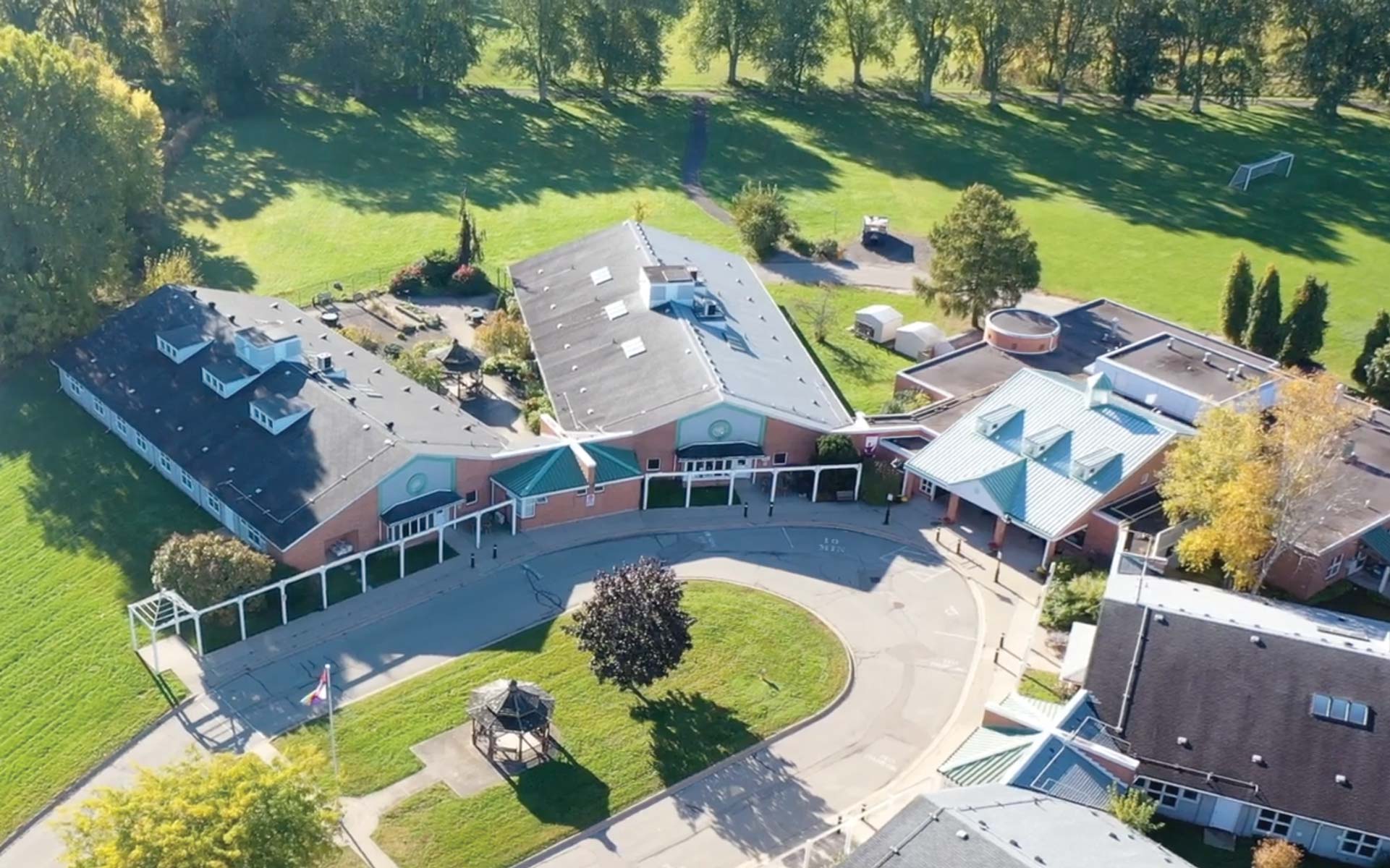
The former Upper Canada Lodge, once a long-term care home, is one such transformation. When the Festival acquired the property at the end of 2024, they reimagined it as the “Shaw Artists’ Village,” an ensemble of spaces forming a critical piece of arts and Festival infrastructure. While it still acts as a home-away-from-home by playing host to visiting artists through wings dedicated to residential accommodations, a wardrobe manufacturing facility and a modern rehearsal/education space also make up the campus. Together, these facilities support the Festival’s production pipeline as well as long-term cultural sustainability locally and beyond.
Enter Govan Brown’s (GB) SW Ontario team to direct and coordinate the build. In being entrusted by the Festival to safeguard the project, it marked GB’s debut on the NOTL stage. Working alongside the Shaw Festival as well as local trade partners, the project was built across two phases; the first being dedicated to two residences and the costume wing and the second encompassing the third and final residence area as well as the education centre. Keeping in constant dialogue with project stakeholders, the team worked in close alignment to develop a framework for success. But while the plan was set, the path forward would require a willingness to adapt in real time.
ACTING IS REACTING
Given that the building’s existing wood-framed structure dates back to the 1970s, the wings that comprise the Artists’ Village came with limited and, at times, unreliable documentation. What drawings did exist offered only a partial picture and left much of the structure’s true conditions to be discovered in real time. Rather than following a strict script, then, the team needed to respond to conditions as they emerged and intentionally advance the work while adapting to site conditions as they were revealed.
In this environment, sequencing was a critical strategic tool. Throughout the project, workstreams were intentionally overlapped and adjusted in order to maintain progress. In some cases, this meant installing drywall top track while continuing to coordinate below- grade scopes. Other times, it required managing interior and roof demolition while simultaneously employing design assist strategies to advance the structural steel and wood framing design. And all of this was set against shifting Canadian weather conditions, which introduced further constraints and required ongoing, real-time recalibration of the project’s sequencing.

We were constantly working in layers and advancing certain scopes while still validating others,” SAYS GB PROJECT MANAGER MANOGNA MENTHEM. “It required a high degree of coordination because timing was everything.”
Early clash detection was essential, then, and allowed the team to identify conflicts as soon as possible and respond with solutions-oriented RFIs. Each submission was developed with clear direction, outlining both the issue and mitigation strategy. This approach ensured alignment between Govan Brown and the Shaw Festival teams, ultimately helping decisions to keep up with the pace of construction.
FITTING THE PART
While the residential wings are more or less continuing their original function from their Upper Canada Lodge days, the wardrobe department and education centre required a higher degree of calibration given the new roles these spaces needed to perform. With the education centre including a mini theatre, digital and dance labs, and rehearsal space, it required structural reinforcement alongside detailed theatre sound and lighting coordination, not to mention careful sprinkler planning.
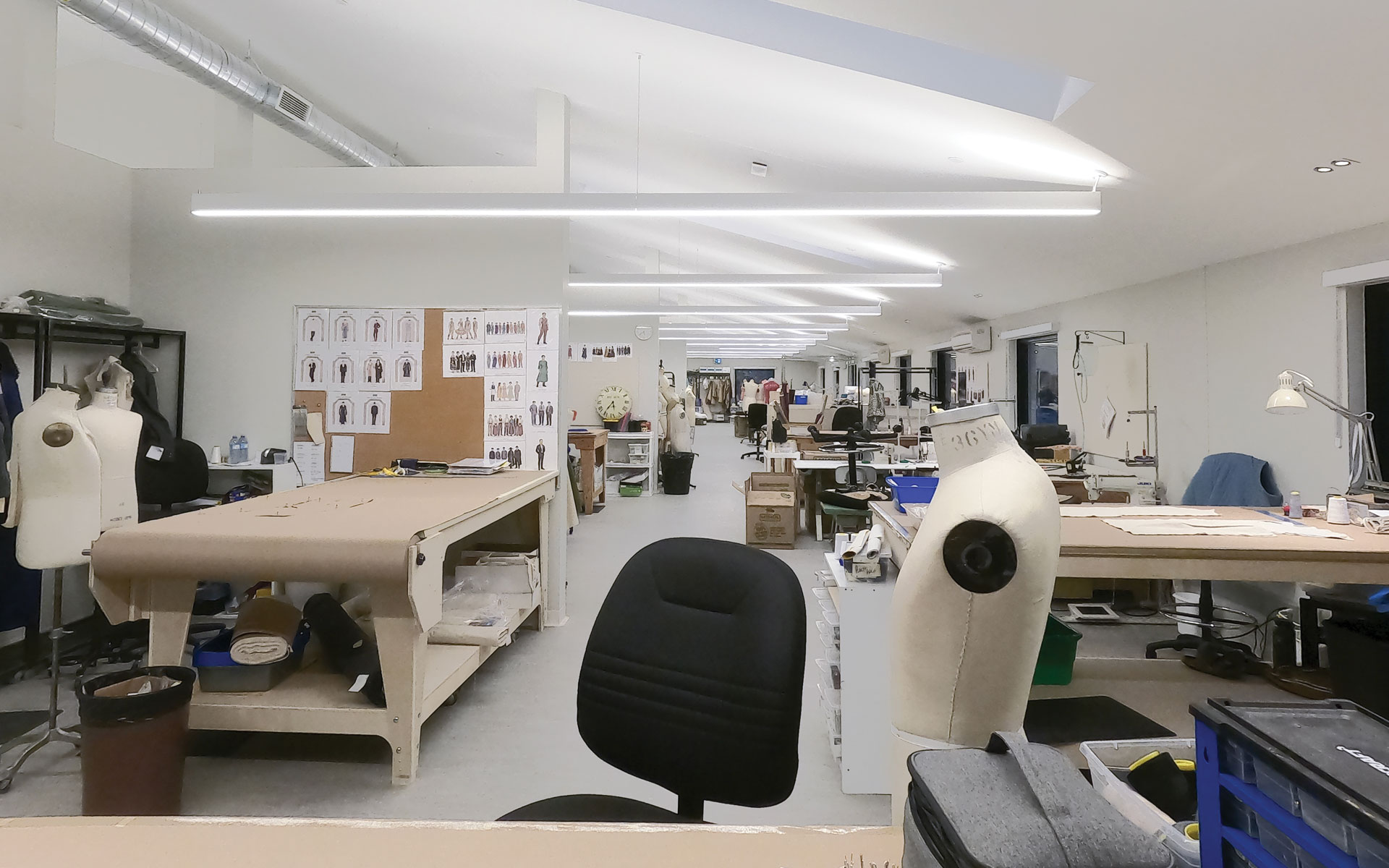
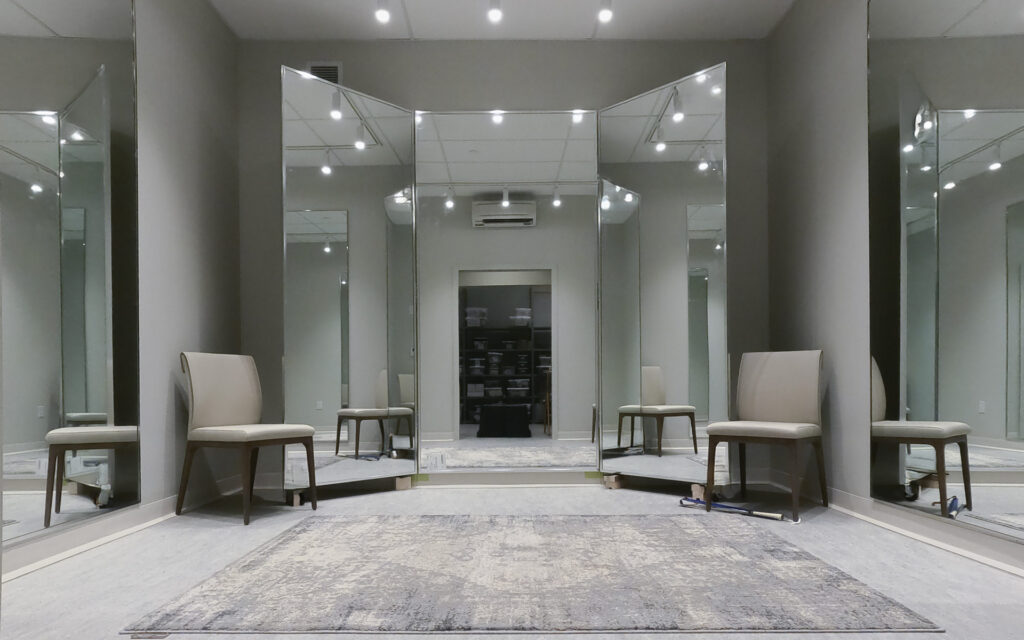
Taking centre stage within the Village is the wardrobe department, a space that’s likewise at the heart of the Festival’s productions’ operations. Designed to support the full life cycle of the costume production, the facility includes mezzanine-level storage, dye rooms, and dedicated fitting areas. Each of these spaces carried with it specific mechanical and electrical requirements that were tied directly to the wardrobe team’s workflow and ultimately introduced another layer of complexity.
As the project progressed, discrepancies between the M&E designs and the needs of the end users surfaced, requiring ongoing coordination to reconcile design intent and operational reality. Through regular coordination meetings and hands-on problem solving, the GB team worked closely with the Festival team to refine layouts and adjust servicing to ensure each space functioned as intended.
STARTING THE SECOND ACT
The success of the Artists’ Village, and especially its preconstruction effort which acted as a trust exercise between GB’s and Shaw’s teams, has set the stage for further collaboration. Now currently overseeing the revitalization of the Royal George Theatre, a century-plus old vaudeville house for World War I soldiers that in the 1980s became the Festival’s main stage, GB has earned the opportunity to support a larger NOTL vision. The team is helping to advance both the Festival’s broader goal as well as NOTL’s commitment to meeting the demands of a 21st century community while still preserving the character and legacy that has defined it.