


Food halls have evolved far beyond their early reputation as upscale food courts. Today, they are carefully curated destinations—blending food, culture, history, and community.

Behind every successful food hall is a construction story as layered as the experience itself. Project teams must deliver highly customized environments where no two kitchens, designs, or tenants are alike. Independent operators, flexible stall concepts, and robust beverage programs introduce unique infrastructure and operational requirements—making early coordination and built‑in adaptability critical from the start.
Two recent projects—Gather Food Hall in Philadelphia and Shaver Hall in New York City—illustrate how the art of building is helping redefine what food halls can be.
GATHER FOOD HALL: BUILDING COMMUNITY INTO THE STRUCTURE
Located on the ground floor of the historic Bulletin Building at Schuylkill Yards, Gather Food Hall is a 13,000sf space that blends culinary diversity with community. Once home to The Philadelphia Bulletin—and later the Philadelphia Eagles’ front office—the building now anchors a growing life sciences hub.
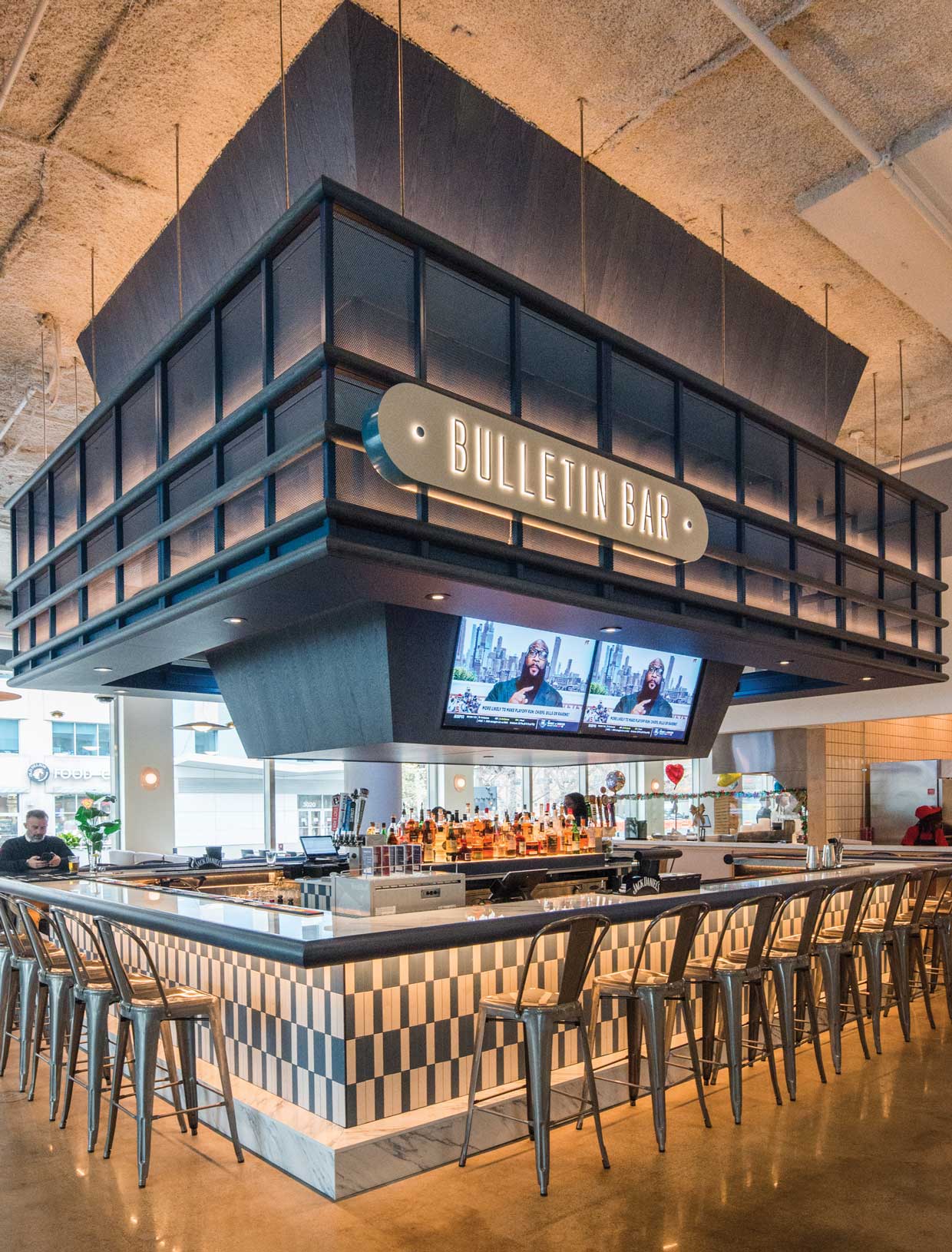
The food hall’s design draws inspiration from the building’s newsroom past, most notably at the Bulletin Bar, where suspended millwork and sculptural elements reference the printing presses that once occupied the site. Delivering these features required thoughtful coordination within an existing structure— integrating modern systems while preserving the building’s historic character.
On a project like this, you’re constantly balancing progress with preservation,” SAYS JOE SPICA, STRUCTURE TONE PHILADELPHIA SUPERINTENDENT. “Early planning and coordination were critical. Once we built momentum in the first few weeks, it set the tone for everything.”
Developed with Brandywine Realty Trust and Hospitality HQ, Gather includes six vendor booths, a full bar, multiple dining areas, mezzanine‑level prep and storage spaces, and a new interconnecting stair. Technical rigor was essential, including extensive concrete scanning and coordination to navigate complex existing conditions. In total, 80 core locations were reviewed to ensure structural integrity and safe execution.
“In older buildings especially, early layout and concrete scanning make all the difference,” Spica added. “Solve those challenges up front, and the whole job moves more confidently.”
SHAVER HALL: COMPLEXITY AT MIDTOWN SCALE
If Gather represents the power of community scale food halls, Shaver Hall showcases the complexity of building one in the heart of Midtown Manhattan.
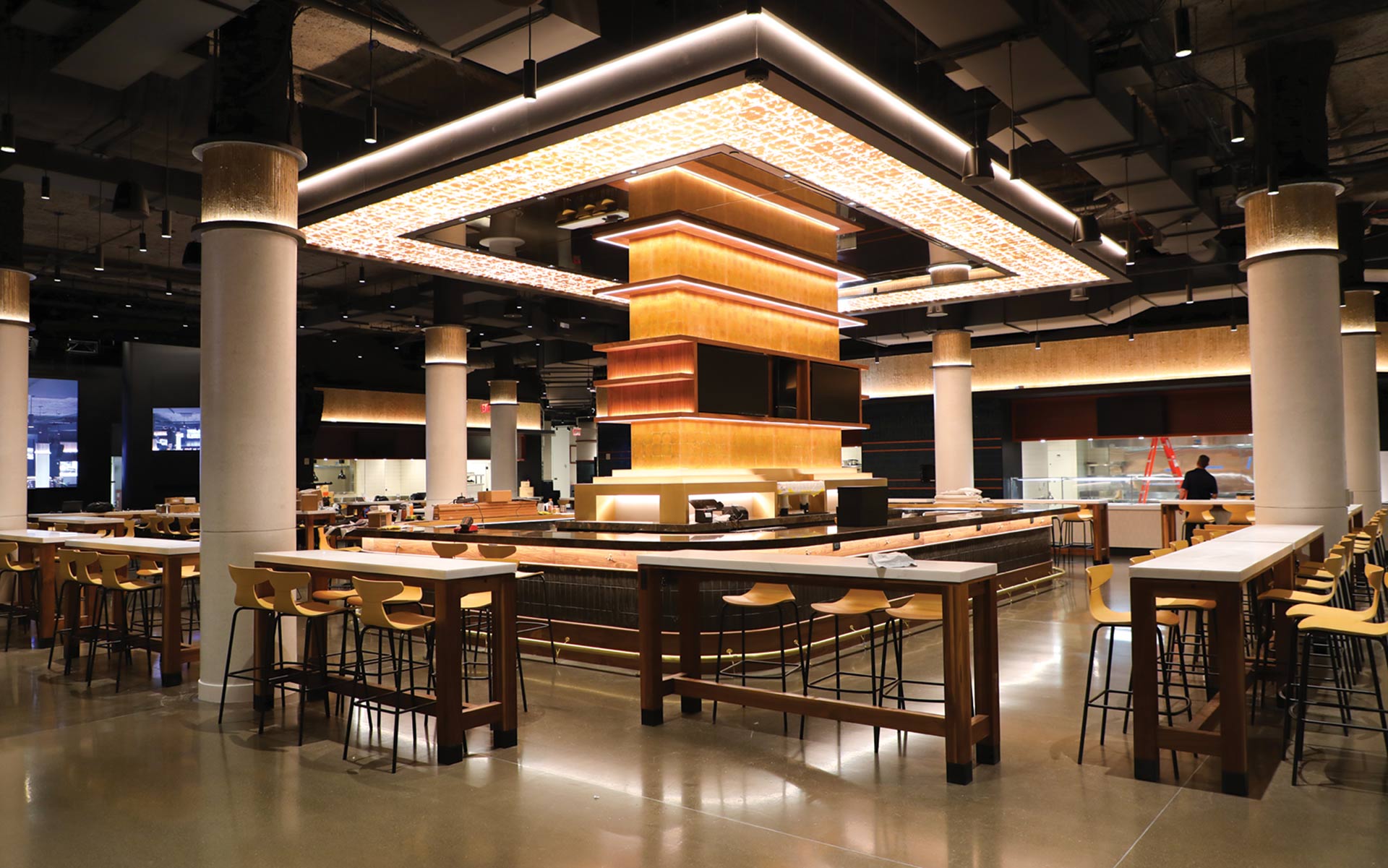
Spanning approximately 35,000sf inside Amazon’s restored Hank building—formerly the landmark Lord & Taylor flagship—Shaver Hall is an ambitious adaptive reuse project. Structure Tone New York’s prior work renovating this building for Amazon informed the delivery of this next phase, which includes over a dozen food stalls, multiple full service restaurants, bars, a curated bodega, entertainment space, and a central stage, all within an occupied building with tight noise and logistical constraints.
Named for Dorothy Shaver, the pioneering president of Lord & Taylor, the project reflects a commitment to honoring history while creating a modern, hospitality driven destination. Structure Tone New York project executive Josh Thompson explains a few of the priorities during the build-out: “Tenant coordination, individualized delivery approaches, aggressive schedules, and the need to integrate complex kitchen infrastructure into a landmarked structure were some of our main focuses as construction progressed.”
The success of Shaver Hall’s construction required constant alignment between the Structure Tone NY team, developers, operators, and design teams—ensuring that each element worked independently yet functioned seamlessly as part of a cohesive whole.
THE CRAFT BEHIND THE EXPERIENCE
Food halls may be defined by what happens once the doors open, but their success is rooted in what happens long before. From adaptive reuse and historic preservation to complex kitchen coordination and vendor flexibility, building a food hall can be both a technical challenge and a creative endeavor.
As cities continue to embrace food halls as anchors of mixed use environments and modern gathering spaces, the art of building them thoughtfully, collaboratively, and with purpose—will remain just as important as the experience they deliver.