




Equipment procurement is one of construction’s most complex challenges—fragmented supply chains, long lead times, and limited visibility can derail even the best-planned projects. David Hamilton, senior vice president of Construction Procurement Solutions at STO Building Group, is changing that. By working directly with manufacturers, leveraging real-time technology, and bringing strategic control to the process, his team is cutting through the noise and delivering results. In this Q&A, Hamilton breaks down what modern procurement looks like and why the old ways of doing business no longer cut it. Construction is a people business. Yes, we build physical structures, but strong relationships undergird every project we deliver.

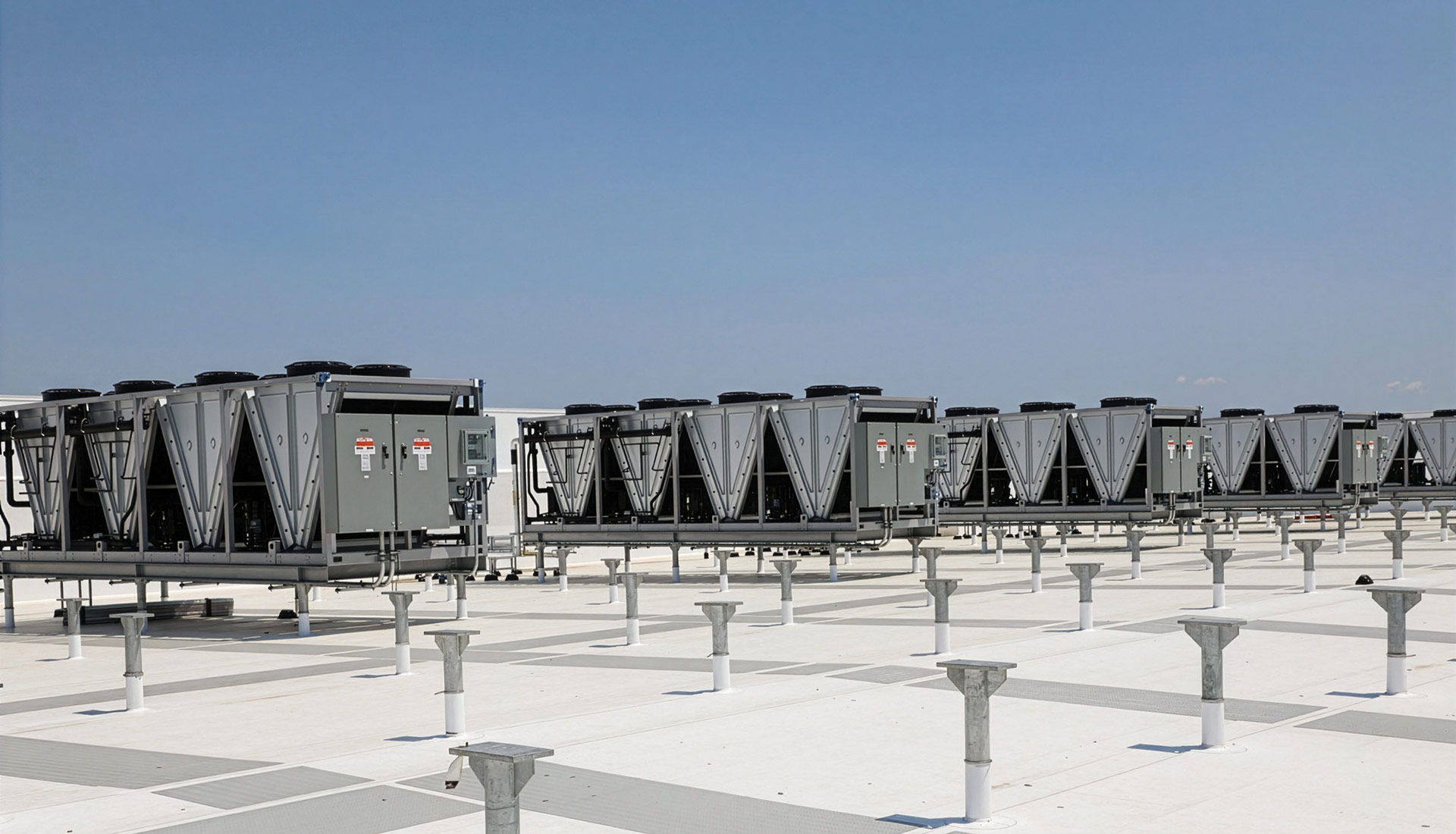
What makes equipment procurement so challenging right now?
David Hamilton (DH): We’re dealing with an industry that is extremely fragmented. There are layers of distributors between manufacturing partners and end users, and historically, there’s been a lack of technology deployment—that’s changing. Large companies are consolidating and leveraging
technology in ways we haven’t seen before. At STO Building Group and Construction Procurement Solutions, we’re doing the same: using our scale to harness technology, increase visibility, and push back against longstanding challenges in the construction industry.
I’m a client starting a new project. What should I ask my contractor about their approach to buying equipment?
DH: Traditional methods are ineffective at best. We’re talking about some of the most technical, complicated, and expensive pieces of equipment, which have historically been left in the hands of trade partners. Change has begun to take root. Clients should ask how their contractor is bringing visibility into the process: how are they removing layers and reducing friction? There are also significant financial burdens placed on trade partners, so having a team that can approach procurement from a new vantage point is critical. Taking on risk, addressing cost, cash flow, and lead times, and ultimately de-risking the project is what we strive for.
What’s the difference between working directly with manufacturers versus going through subcontractors?
DH: The difference is night and day. Working directly with manufacturers brings a new level of control; partnerships and relationships lead to more effective strategies.
Time is the largest factor, with cost a close second. Instead of leaving both in the hands of subcontractors, we aim to actively control them. Manufacturers are often unaware of where their products are specified or the price at which they’re sold due to multiple layers in the supply chain, so bringing visibility
to both contractors and manufacturers has been key to improving outcomes.
How does technology help keep procurement on track?
DH: Digitization in the industry has been slow, but it’s caught up. Technology now allows us to track equipment at every stage of the process and gain visibility into manufacturer timelines. We’ve often talked about being on the “leading edge” rather than the “bleeding edge,” but when it comes to technology, we’re pushing further. We want to understand and use tools that give us real-time insight: where equipment is, how it’s progressing, and how to communicate that back to field teams. That level of certainty is critical in keeping projects on track.
What is Construction Procurement Solutions, and how does it simplify the process?
DH: It comes down to choice and control. We provide clients with choices, whether that’s prioritizing time or cost, and we bring control to the process. Instead of leaving large, complex equipment entirely in the hands of trade partners, we create visibility into where products are, when they’ll arrive, and how they’ll be delivered. This is supported by a team of highly qualified mechanical and electrical engineers, along with post-award specialists who track equipment digitally and coordinate delivery. From early-stage decision-making to execution, we help level the playing field and maintain control through every phase of procurement.


Construction Procurement Solutions
ABOUT DAVID HAMILTON
David has decades of experience in purchasing and estimating. Over his career, he has not only developed critical relationships with trade partners and suppliers, but also tapped into the growing STO Building Group platform to develop a comprehensive purview of the supply chain and its ongoing developments. In leading CPS, David continues to strengthen relationships with major manufacturing partners, leveraging the company’s position in the marketplace to help our teams execute our clients’ projects and vision.
