




By Michael P. Walsh, Vice President, Elevator Construction Consultants (ECC)
For decades, elevators have been the quiet backbone in the construction world—the intricate machine that allows our skylines to exist. Often first trades on-site and the last to leave, elevators support the way we live and move day-to-day. Yet, too many building specs are stuck in the past, anchored to outdated technologies that can’t meet the demands of tomorrow’s structures.
Today, we stand at a technological crossroads. After decades of anticipation, the so-called “Smart Elevator Revolution” is no longer a promise. It’s here and it’s redefining how buildings function from the inside out.
From Steam-Era Safeties to 21st Century Precision
For over 150 years, elevator safety has revolved around a mechanical marvel: the governor. Simple, effective, and time-tested, this Victorian-era invention uses centrifugal force and steel ropes to halt a speeding car.
But in an age of high rise towers and digital infrastructure, reactive safety isn’t enough.
Enter PESSRAL—Programmable Electronic Systems in Safety-Related Applications for Lifts. Starting in 2026, buildings across the US will begin integrating Electronic Safety Actuation. Instead of relying on the physics of a fall, these new systems proactively sense micro-slips in traction and apply electronic brakes before any real danger occurs. Powered by SIL-3 rated sensors and pinpoint accuracy, these upgrades offer:
- Improved Safety: Real-time car position tracking ensures faster, smarter responses.
- Smarter Space Use: Reduced equipment in the hoistway allows for cleaner designs and shallower pits, which are critical in flood-prone regions.
The Rise of Native AI and Edge Computing
Until recently, “smart elevators” were merely cloud-connected. They sent data off-site and waited for instructions. In 2026, the intelligence moves to the controller itself.
This is native AI—machine learning embedded directly within the elevator system. It doesn’t wait to be told what to do. It thinks for itself.
Imagine a speck of debris in a door sill on the 14th floor. In a traditional system, that could shut the car down, triggering delays and dispatching a mechanic. But with native AI, the elevator feels a minor spike in door torque, adjusts in real time, and alerts maintenance to take a look, meaning no downtime or disruptions. It’s not just about efficiency, it’s about resilience.
This shift transforms vertical transportation from a reactive system to a predictive, intelligent platform. Technicians evolve into analysts. Maintenance becomes optimization.

Digital Twins: Designing for Performance Before Breaking Ground
In the past, traffic analysis relied on estimates and experience. Today, Digital Twin technology lets us simulate an elevator system’s behavior before the building is even built.
By feeding BIM data into advanced simulation engines, we can virtually simulate the morning rush, the friendly conversation while holding the door, or even a fire alarm evacuation. Even before a single rail bracket is ordered, the system knows that the freight car will be under pressure every Friday at 4:00 PM and adjusts dispatch logic accordingly.
When the building goes live, the Digital Twin stays active. It shadows the real elevators, comparing expected behavior with actual performance and flagging deviations early.
Going Beyond the Rope: Ropeless Elevators and TWIN Technology
We’re also seeing radical design innovations like magnetic levitation elevators (for instance, ThyssenKrupp’s MULTI) and TWIN systems, where two independent cars share a single shaft.
In dense urban environments like New York or Los Angeles, these innovations free up valuable square footage (up to 100 leasable square feet per floor). For developers, that’s not just cool tech, that’s tangible ROI.
At ECC, we’re already conducting feasibility studies that streamline elevator cores, returning real estate value to the project. These aren’t theoretical gains—they’re happening now.
Why Now? Why Here?
Many of these technologies have been piloted abroad from Shanghai to Berlin and beyond. So why are they just reaching the U.S.?
Because American standards are designed for permanence, not flash. Our rigorous safety codes and labor expectations demand the highest-quality solutions. As one colleague once put it, “Take it overseas, test it thoroughly, then bring it home.” It’s the ultimate quality control.
And American elevator mechanics are far from being threatened by automation. Instead, they’re being empowered by it. The future of vertical transportation is about giving elevator mechanics the best tools in the world, rather than replacing them.
Elevators as Infrastructure: The Backbone of the Modern Building
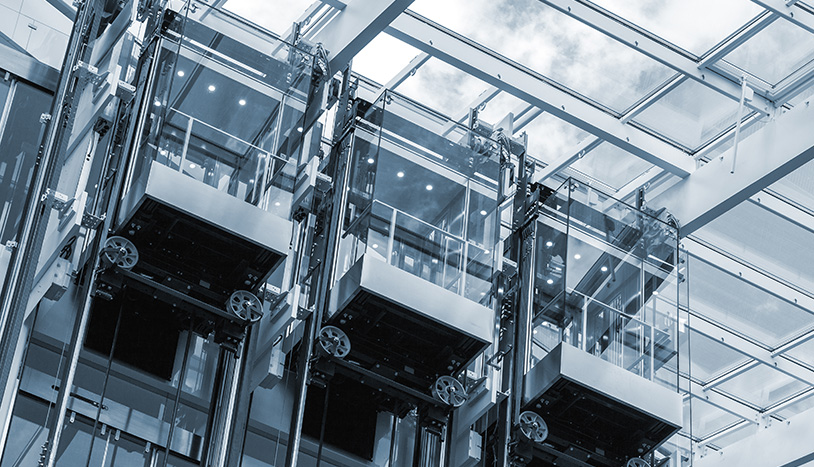
The elevator of 2026 is no longer just a conveyance. It’s a data center, a safety officer, and a logistics coordinator—all encased in stainless steel.
At ECC, we stand with developers, architects, and construction teams from day one:
- We write specs that futureproof your building.
- We protect your schedule by making vertical logistics a priority.
- We verify technology, ensuring the flash is backed by function.
Whether you’re breaking ground in Philly, launching a high-rise in New York, or reimagining infrastructure in the Midwest, you can design around a box on a rope or you can build a future-ready, intelligent vertical system.
Build the Future, Not a Fossil
Technology has caught up with imagination. The tools are here, the code is ready, and the workforce is more than capable. As the industry evolves, the question is no longer if you’ll adopt smart elevator systems, but when.
Don’t let your next project become a mechanical fossil. Let’s build something smarter.


About Michael Walsh
Michael Walsh is Vice President of Elevator Construction Consultants and a recognized expert in vertical transportation with nearly 40 years of experience in the elevator and escalator fields. His career includes senior roles at LF Driscoll and Citywide Elevator Consultants, where he led complex modernization and construction projects nationwide. A certified elevator mechanic and National QEI Certified Elevator Inspector licensed in multiple states, Michael holds more than 20 certifications across various elevator systems. He also serves on four National ASME Code Committees, contributing directly to the development of industry safety and performance standards.