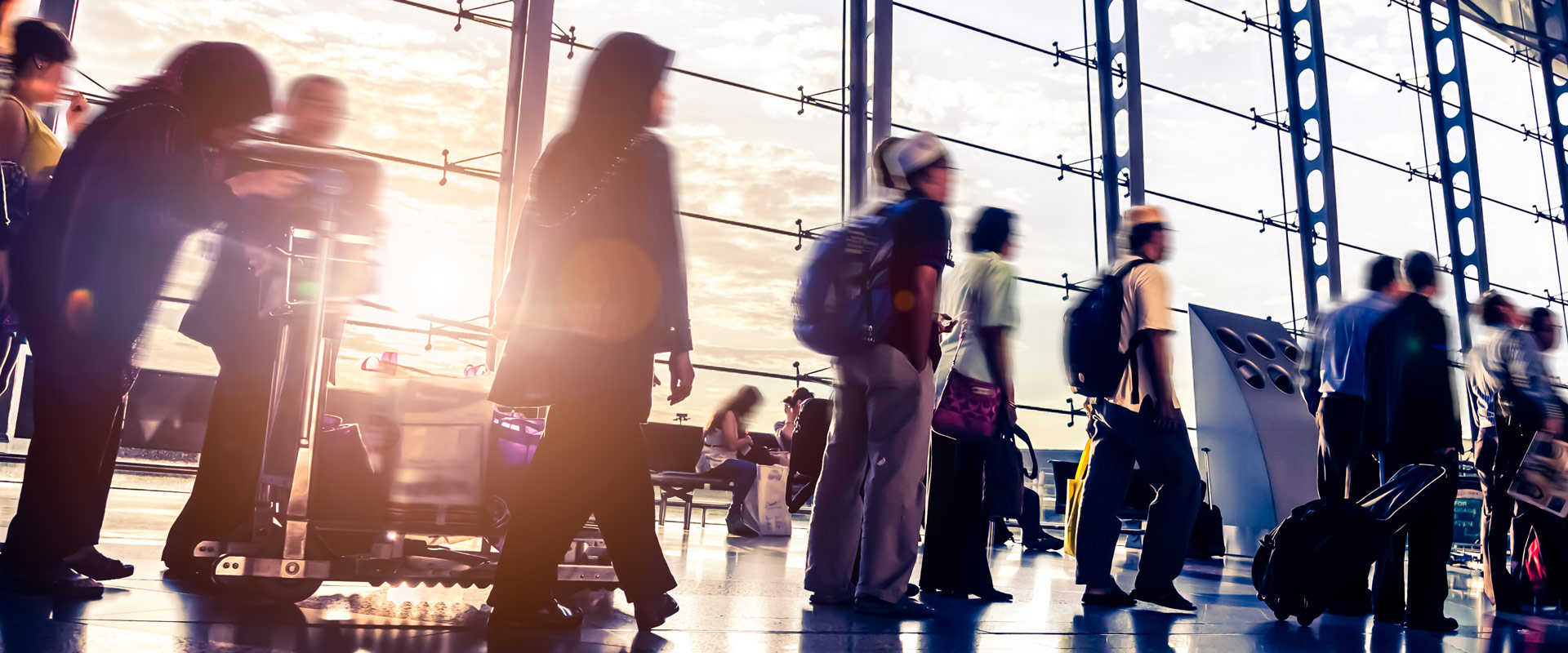
Travelers with luggage move through a sunlit airport terminal with floor-to-ceiling windows.

At any given moment, an airport is doing hundreds of things at once. Aircraft are arriving and departing. Passengers are moving between security, concessions, and gates. Bags are traveling through handling systems. Airlines are boarding flights. Restaurants are serving customers. Somewhere in the middle of it all, construction is happening.

For aviation builders, the challenge is completing the job while allowing everything around them to continue operating safely, securely, and with as little disruption as possible. “We have to understand when to move, when to stop, when to ask for permission, and when to coordinate,” says James Dean, Director of Aviation at Structure Tone. “When you do it well, you become almost invisible.”

Because the complexity of building in and around an airport should never be noticeable to the passengers, airport staff, and airline teams moving around it, the STO Building Group aviation team often describes their role on these projects as being a “ghost in the night.” Pulling that off takes construction expertise and a deep understanding of how airports operate.

Construction is One Piece of the Puzzle

The FAA maintains specific guidance for operational safety during airport construction, reflecting the unique challenge of performing construction alongside active airport operations. But the regulatory environment is just one layer of complexity.

Aviation projects can require coordination with airport authorities, airlines, TSA, Customs and Border Protection, the FAA, airport operations and security teams, baggage handlers, concessions, ground crews, and other contractors. “You’re not working for one owner,” says Jeffery Charlton, General Superintendent at Structure Tone. “There are so many stakeholders involved and each has a role in keeping the airport moving.”

In this intricate environment, construction teams must work around airport operations, not the other way around. A construction activity can’t prevent an aircraft from reaching its gate. Deliveries can’t interfere with vehicles servicing flights. Work can’t compromise security screening, baggage operations, or emergency egress. For experienced aviation teams, understanding those dependencies begins long before anyone steps onto the jobsite.

Logistics Behind the Build

In an airport, personnel working in secure areas are subject to airport-specific access, badging, and training requirements. Construction managers need to understand those requirements not only for their own staff but for every subcontractor and specialty trade supporting the project.

Deliveries introduce another layer. Depending on the airport, location and material, bringing a truck onto a site can involve security procedures, approved access points, authorized drivers, escorts, controlled routes, staging areas, and specific delivery windows. “A lot of it is learned over time,” says Michael Cortese, Senior Project Manager at Structure Tone. “Having a team that’s familiar with the rules is critical, but communication is just as important. It’s about knowing the people you have to coordinate with, establishing those relationships, and understanding the procedures.”

A small oversight can have significant schedule implications. If a delivery misses its window or arrives without meeting airport requirements, it may be turned away, potentially forcing installation and labor to be rephased.

Even housekeeping takes on a different significance. The FAA defines Foreign Object Debris, or FOD, as an object located within the airport environment that has the capacity to injure personnel or damage an aircraft. For construction teams, that makes tool and material accountability a safety issue. “Imagine a worker drops a bolt,” Gary High, Project Executive at Structure Tone says. “On a commercial job, someone picks it up. But in an airport, that bolt can become foreign object debris.”

Tools, fasteners, materials, and debris must be carefully controlled. This heightened level of accountability is one example of a larger reality: activities that are routine on most construction sites can carry very different consequences inside an airport.

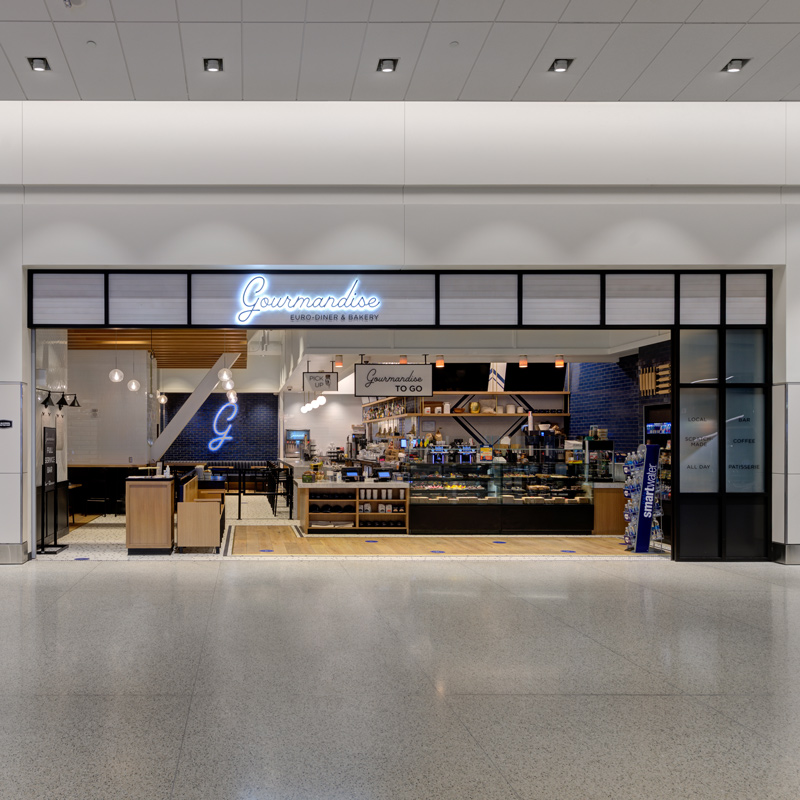
Concessions and restaurants, like the new Gourmandise at Salt Lake City International Airport, enhance the passenger experience airside. Managing their construction within an active terminal requires an equal focus on passenger experience.

Protecting the Passenger Experience

Construction may be happening directly beside an operating restaurant, active gate, or heavily traveled passenger corridor. Temporary partitions establish the physical boundary, but creating a controlled construction environment requires much more than putting up a wall. Behind that barrier, teams are managing dust, noise, odor, security, and egress. Outside it, passengers still need clear circulation and intuitive wayfinding.

“The construction team has to create a secure environment inside the building without stopping operations,” Dean says. “You may be working right next to passengers, but they shouldn’t experience what’s happening behind that wall.”

At Provo Airport in Utah, Layton Construction is navigating that challenge as part of a multiphase terminal expansion. As construction progresses, temporary walls are continually adjusted to extend or reduce the terminal’s sterile and secure areas, requiring close coordination with TSA and airport operations. The standard is exacting: if something as small as a razor blade can slip through a temporary wall or a joint in the glass, the barrier doesn’t meet airport security requirements.

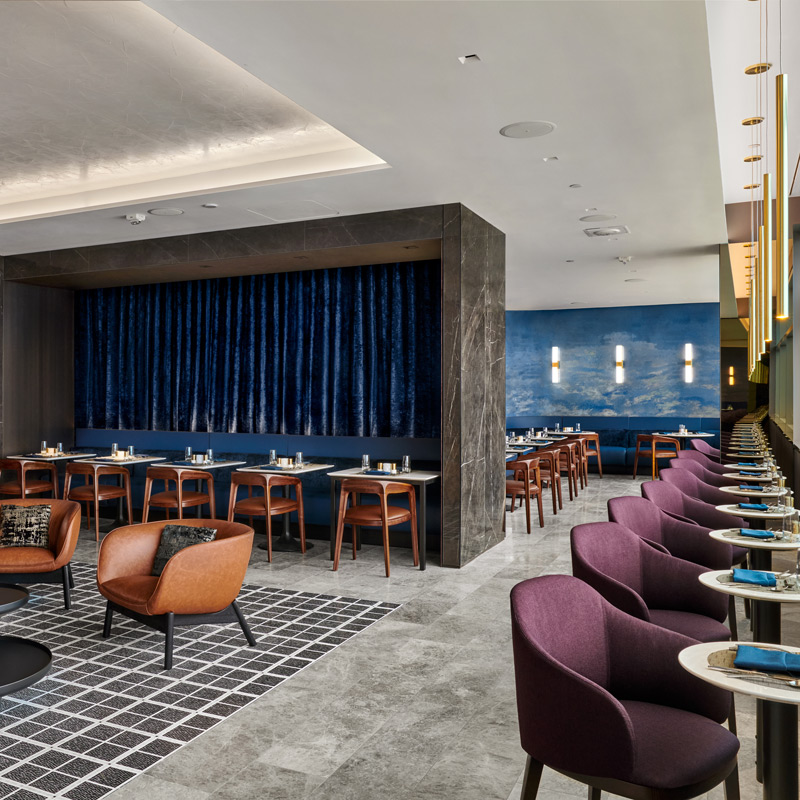
Space itself can create another challenge. During the United Polaris Lounge Dining Room Expansion, Structure Tone completed portions of the work with less than two feet separating the construction workspace from an active bar area. Within that narrow footprint, the team had to execute the work while minimizing its impact on the passengers and airport activity happening immediately beside it.

Both examples underscore one of the airport’s biggest priorities: the passenger experience. Even when construction is happening just feet away, passengers still need to be able to move comfortably and intuitively through the terminal with minimal disruption.

For STO Building Group teams, that responsibility extends beyond the construction zone. Acting as an extension of airport staff means understanding that every interaction can shape the passenger experience. If a passenger approaches someone from the project team looking for a gate or baggage claim, they are prepared to point them in the right direction or connect them with someone who can.

Expanding United Airlines high-end Polaris Lounge at Newark International Airport meant strict separation of construction activities from guests and staff – often just feet away on the other side of the partition.

“Passenger experience is huge,” Charlton says. “That’s what it’s all about.”

Construction Without Disruption

Perhaps nowhere is aviation experience more important than when construction interfaces with the critical systems that keep an airport functioning: baggage handling, fire alarms, data networks, passenger information systems, HVAC, security infrastructure, water systems. The list goes on.

Renovating an active airport can require modifying, relocating, or connecting to those systems without compromising the operations that depend on them. Dean compares it less to demolition and more to surgery. “You’re not simply cutting into or splicing things. The airport still has to flow and operate. When we tie into these critical systems, we have to approach it like surgeons.”

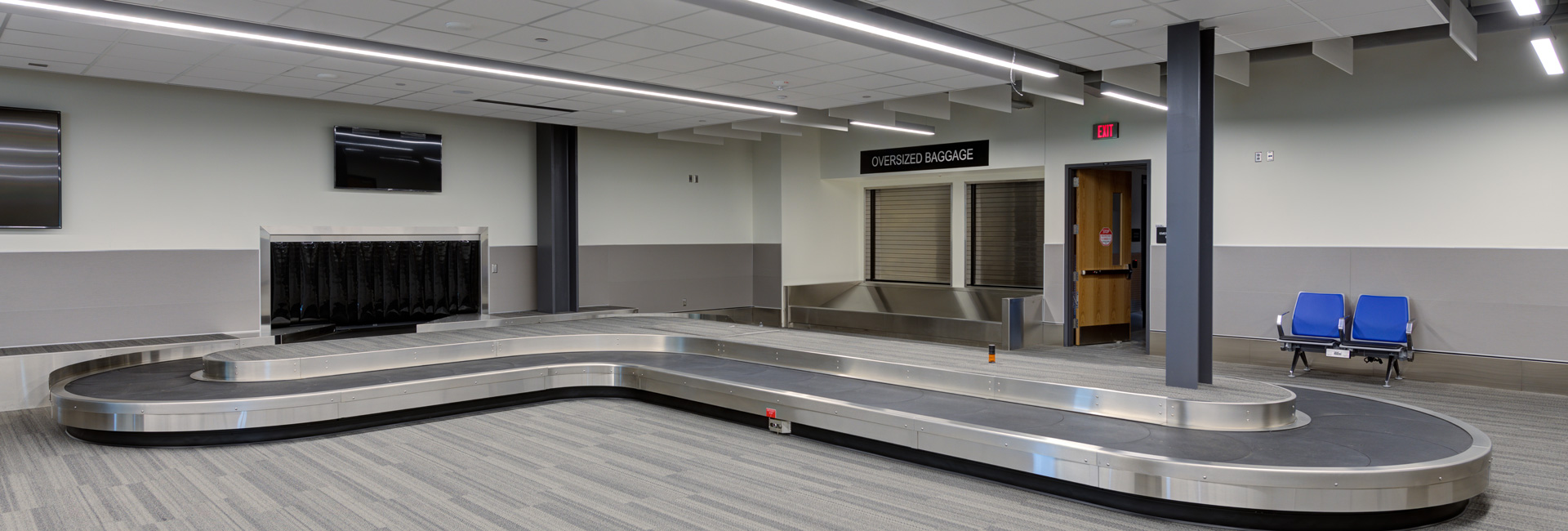
During a recent terminal expansion at a major international airport, Charlton’s team put that approach into practice when they connected new baggage belts to the terminal’s existing baggage handling system. The work itself occurred within a tightly controlled window, but only after months of planning and coordination. The team completed the tie-in, transferred power, and brought the system back online without compromising the terminal’s broader baggage operations. For aviation clients, that’s where sector experience becomes particularly valuable.

Most people only see a small portion of the baggage handling system (BHS) when they drop off or pick up their luggage. Installing a new BHS is a major infrastructure project with serious security and logistical coordination.

Knowing How to Adapt

Airport standards can document requirements, drawings can illustrate phasing, and logistics plans can establish routes and schedules. But what happens when an aviation team is inevitably confronted with the unexpected?

A supplier arrives without the right access. A flight delayed by weather hundreds of miles away pushes into a planned construction window. An operational priority changes a delivery route. A subcontractor suddenly needs access to a different secure area. The airport isn’t going to stop, so the construction team has to adjust. “There’s only so much you can put on paper,” Cortese says. “A lot of it comes down to communication and knowledge of the procedures.”

That knowledge is built over years of working within airports and understanding how the many pieces of the environment interact. It informs which questions get asked during preconstruction, how logistics are planned, where schedule risk may be hiding, and who needs to be part of the conversation before a critical activity occurs. For clients, that experience creates an important layer of predictability in an inherently dynamic environment.

The Art of Being Invisible

When airport construction is executed exceptionally well, much of the work required to make it successful is invisible. Passengers, bags, and aircraft keep moving and terminals continue to function. Behind the scenes, construction teams are coordinating access, securing work zones, accounting for tools, managing deliveries, protecting critical systems, adjusting schedules and communicating across an enormous network of stakeholders.

“Building in an active airport means constructing around an operation that never stops. Every decision must balance safety, security, passenger experience, airline operations, and schedule.” Vincent Cartiglia, Construction Manager at Structure Tone says. “The best aviation teams don’t just build the project they understand the airport’s operation well enough to become part of it, delivering the work without disrupting the mission.”

That’s the expertise experienced aviation builders bring to the table. The objective is to understand the airport well enough that construction becomes part of its rhythm, moving when it can, adapting when it must, and leaving as little disruption behind as possible.

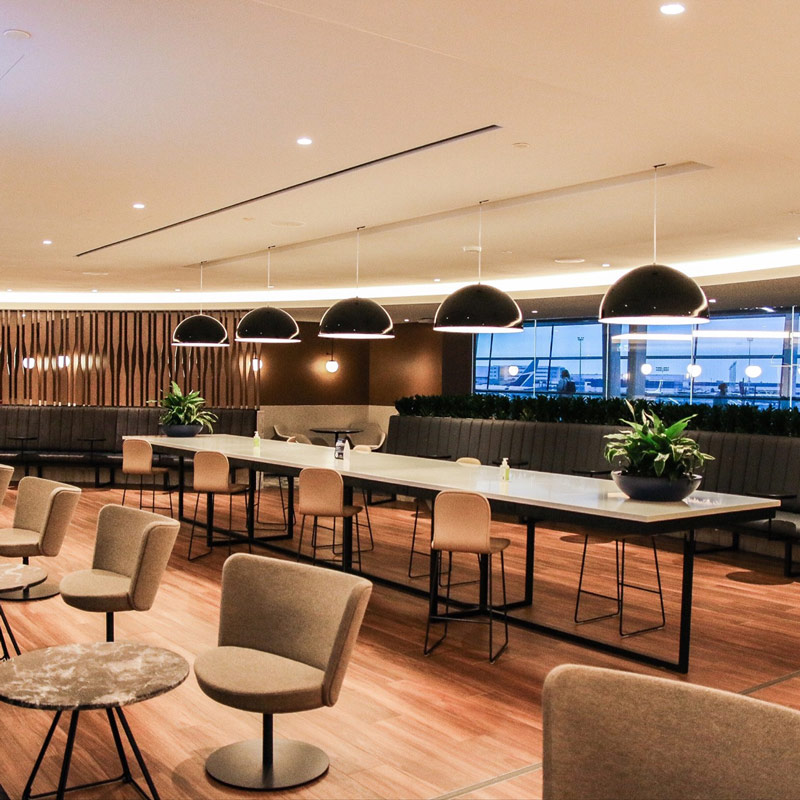
Airport lounges, like WestJet’s Elevation Lounge at Calgary International Airport, are full-fledged hospitality outfits with commercial kitchens and bars. That means coordinating equipment deliveries and tying into existing building systems without impacting operations.

As Charlton puts it: “Nobody knows we were there.”

Meet the Team

James Dean
Director of Aviation
Structure Tone Southwest

Jeffery Charlton
General Superintendent
Structure Tone Southwest

Michael Cortese
Senior Project Manager
Structure Tone

Gary High
Project Executive
Structure Tone Southwest

Vincent Cartiglia
Construction Manager
Structure Tone Southwest

Exit mobile version