





By Jennie Taveras, Vice President, Life Sciences Sector Leader, STO Building Group


While parts of the life sciences sector have cooled in recent years, investment in large-scale research and manufacturing facilities continues across the globe. From advanced biomanufacturing plants to integrated research campuses, projects that once measured in the hundreds of thousands of square feet are now pushing well beyond that.
The growth is real and it’s accelerating. The U.S. life sciences sector has seen billions in new capital investment over the past several years as companies expand biologics manufacturing capacity, accelerate drug development pipelines, and respond to national efforts to strengthen domestic pharmaceutical production. But as facilities grow larger and more technically complex, a concerning pattern is emerging across the industry: mega life sciences projects are encountering significant delivery challenges.
Schedule delays, cost escalation, and commissioning setbacks are becoming more and more common. In many cases, the root causes are not scientific complexity, but construction realities that were undervalued early in the planning process. For owners embarking on large-scale life sciences facilities, four risks consistently emerge, and addressing them early can make the difference between a smooth delivery and a costly setback.
Risk #1: Underestimating Procurement Complexity
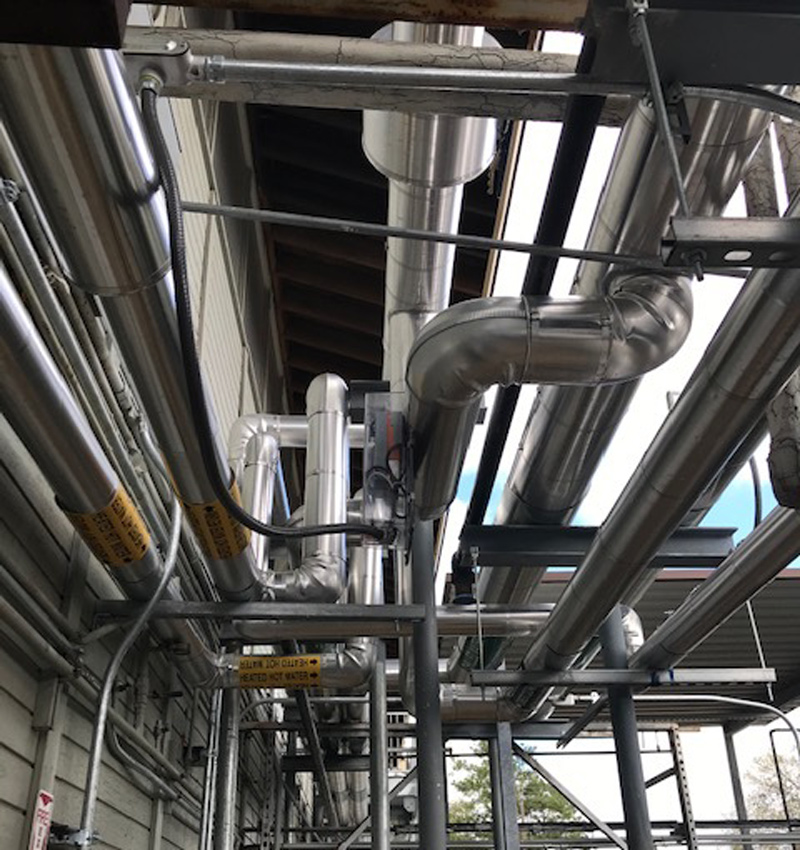
Whether it’s cleanroom infrastructure or high-purity process piping, we’re all well aware life sciences facilities rely on highly specialized systems and equipment. These components come with extraordinary lead times—in some cases, 60 weeks or longer.
Today, those timelines are increasingly volatile. According to STO Building Group’s Q1 2026 Procurement Update, procurement conditions are being shaped by tariff-driven cost pressures, extended lead times for critical electrical and HVAC equipment, and ongoing geopolitical disruptions impacting global shipping and energy markets. Material-specific challenges, including copper shortages, rising aluminum costs, and polymer supply risks, are adding further uncertainty. At the same time, financial pressure on specialty subcontractors is increasing the risk of disruption mid-project.
For life sciences facilities, where complex systems drive construction sequencing, these factors can quickly impact both schedule and cost if not addressed early.
Managing Risk #1: Procurement strategy must begin far earlier than many owners anticipate. For life sciences facilities, this often means during the early design stages rather than when construction begins. Identifying long-lead equipment early allows project teams to lock in manufacturing slots, align installation sequencing, and reduce the likelihood of schedule disruptions.
Contractors with strong supplier relationships and significant purchasing volume can also help owners mitigate procurement risk by securing critical materials earlier, monitoring market shifts, and stabilizing pricing in uncertain conditions. Increasingly, the most effective procurement partners bring a singular focus to procurement: their only business is buying equipment, not installing it. That focus aligns every decision around the best outcome for the owner. This is the model used by STO Building Group’s procurement partner, Construction Procurement Solutions (CPS), whose manufacturer relationships are built on performance and trust—ensuring the right equipment arrives at the right time and at the right price.
> For more on procurement, read STOBG’s Procurement Update: Shifting Market Dynamics April 2026.

Risk #2: Assuming Specialized Labor Availability
The next challenge these massive projects face is securing a workforce with extremely specific expertise. These critical trades are not only specialized, they are limited and in high demand. Life sciences projects are competing for the same highly skilled labor pool as mission critical and healthcare facilities, both of which are seeing rapid growth and expansion across the country.
These labor market realities have placed intense pressure on specialized construction trades nationwide. According to the Associated Builders and Contractors (ABC), the U.S. construction industry needs to attract nearly 500,000 additional workers by 2027 in order to meet demand.
At the same time, several macro factors are tightening the labor market even further. STO Building Group’s 2025 Procurement Update notes that heightened immigration enforcement and new visa fees are thinning traveling construction crews, while megaproject pipelines in regions like the Southeast, Southwest, and Mid-Atlantic are driving wage escalation as demand for skilled workers intensifies.
As Greg Dunkle, STO Building Group Chief Operations Officer, explained in a recent podcast, the challenge is not simply the number of workers available, but access to tradespeople with the specialized skills required for highly technical environments like laboratories and biomanufacturing facilities.
> For more on labor, tune in to The State of the Construction Labor Market with Greg Dunkle on the Building Conversations podcast.
Managing Risk #2: Mitigating this risk requires proactive workforce planning early in the project lifecycle. On large-scale projects, this often begins with identifying peak labor demand well in advance, sometimes requiring hundreds of specialized tradespeople across multiple phases of construction.
On a recent STOBG project, meeting that demand required early engagement with key trade partners to secure commitments before design was fully complete. By leveraging a national network of specialized subcontractors, our team was able to supplement local labor with experienced crews from other regions, ensuring critical scopes remained staffed as the project ramped up. At the same time, modular and prefabricated construction strategies helped reduce on-site labor needs, while targeted workforce development efforts supported training and onboarding for highly technical environments.
Without this level of planning and coordination, labor availability can quickly become a major constraint on project sequencing and schedule performance.

Risk #3: Schedule Compression Tests Budget, Quality, & Safety
Drug development timelines are accelerating, competition is intense, and capital investment cycles move quickly. The result? Enormous pressure for life sciences companies to bring new facilities online as fast as possible.
To meet these timelines, many projects rely on fast-tracked delivery approaches where design and construction overlap. While this strategy can accelerate schedules, it also increases project risk if teams are not aligned early. Compressed schedules can lead to design changes during construction, sequencing conflicts between trades, rework, and delays during commissioning and validation.
These challenges are not unique to life sciences, but they are amplified in highly technical environments. According to a McKinsey survey of senior project executives, large capital projects overrun their budgets and schedules by 30%-45% on average, highlighting the systemic challenges of managing complexity at scale.
Beyond cost and schedule impacts, aggressive timelines can also introduce serious safety and quality concerns. When work is compressed into tighter windows, multiple trades are often working simultaneously in confined areas, increasing congestion and coordination challenges on site. This environment can elevate the risk of accidents while making it more difficult to maintain the careful installation and inspection required for highly specialized systems. In life sciences facilities, where environmental controls, contamination prevention measures, and complex process utilities must perform flawlessly, even small installation errors can compromise system performance, potentially leading to costly rework or delays during commissioning and validation.
Managing Risk #3: Managing schedule compression risk requires early coordination across owners, designers, contractors, and key trades. Just as importantly, strong project management and disciplined field leadership are essential to maintaining high standards of safety and quality when schedules are aggressive. Clear communication, rigorous inspection processes, and a culture that prioritizes safety help ensure that accelerated timelines do not come at the expense of worker wellbeing or system performance.
Integrated planning, early contractor involvement, and transparent project controls allow teams to identify conflicts sooner and sequence work more effectively.
Risk #4: Siloed Commissioning, Qualification, and Validation (CQV)
Life sciences owners understand that commissioning, qualification, and validation (CQV) ultimately determine whether a facility can begin operating. Yet on many projects, CQV becomes a major bottleneck—not because of the testing itself, but because the requirements that support it were not fully integrated earlier in the project lifecycle.
In traditional delivery models, design teams, contractors, equipment vendors, and validation specialists often work in parallel silos, each responsible for a different stage of the process. When commissioning requirements, documentation standards, and testing protocols are not aligned during design and construction, issues discovered during CQV can require system adjustments, additional verification, or even rework, which ultimately delays operational readiness.
Industry guidance from the International Society for Pharmaceutical Engineering (ISPE) increasingly emphasizes a risk-based commissioning approach, where commissioning and validation considerations are integrated throughout design, procurement, and construction rather than treated as a downstream activity.


Managing Risk #4: When project teams bring all CQV stakeholders into planning discussions early and ensure installation, documentation, and testing requirements are aligned across disciplines, the validation phase becomes significantly more predictable. Instead of creating delays at the end of the project, CQV becomes a structured pathway to operational readiness.
A strong Validation Master Plan established early is also key—it aligns scope, documentation expectations, and testing strategy across stakeholders, reducing late-stage surprises and rework.
Make Your Megaproject a Success
The risks outlined here are the realities that nearly every large-scale life sciences project will encounter. The good news is that these risks are manageable when owners address them early and assemble the right project team from the outset. Owners who successfully deliver mega life sciences facilities tend to focus on four priorities:
- Engage the construction team early. Early contractor involvement allows builders to identify procurement risks, workforce constraints, and sequencing challenges during design, when solutions are far easier to implement.
- Treat procurement as a strategic schedule driver. Long-lead equipment and specialized systems should be identified early and incorporated directly into the project timeline. Procurement planning is often the single biggest factor influencing delivery certainty.
- Plan your workforce as carefully as your design. Work with your contractor to understand what specialized subcontractors will be required, confirm they are fully committed to your project, and discuss how your contractor plans to handle any potential labor fluctuations throughout the job. Access to specialty trades can make or break complex life sciences projects.
- Integrate commissioning and validation early. Bringing CQV teams into planning discussions during design and construction helps ensure systems are installed, documented, and tested in ways that streamline the final validation process.
Life sciences facilities are becoming larger, more integrated, and more technologically advanced as companies scale research and manufacturing capabilities. But with scale comes complexity. For owners embarking on the next generation of life sciences facilities, success will depend on a combination of investment, innovation, and understanding of the construction realities behind these highly technical environments.

About Jennie Taveras
A chemical engineer by training—she earned both bachelor’s and master’s degrees in chemical engineering from New York University—Jennie Taveras’s career includes several years working as an engineer and project manager for large pharmaceutical leaders such as Bristol Meyers Squibb and Sanofi Pasteur, as well as years in engineering consulting and business development. This depth of experience has armed her with a unique blend of insight into the owner’s perspective, understanding of the sector, and a record of building valued client relationships.
Interested in learning more about life sciences construction? Reach out to Jennie here.