
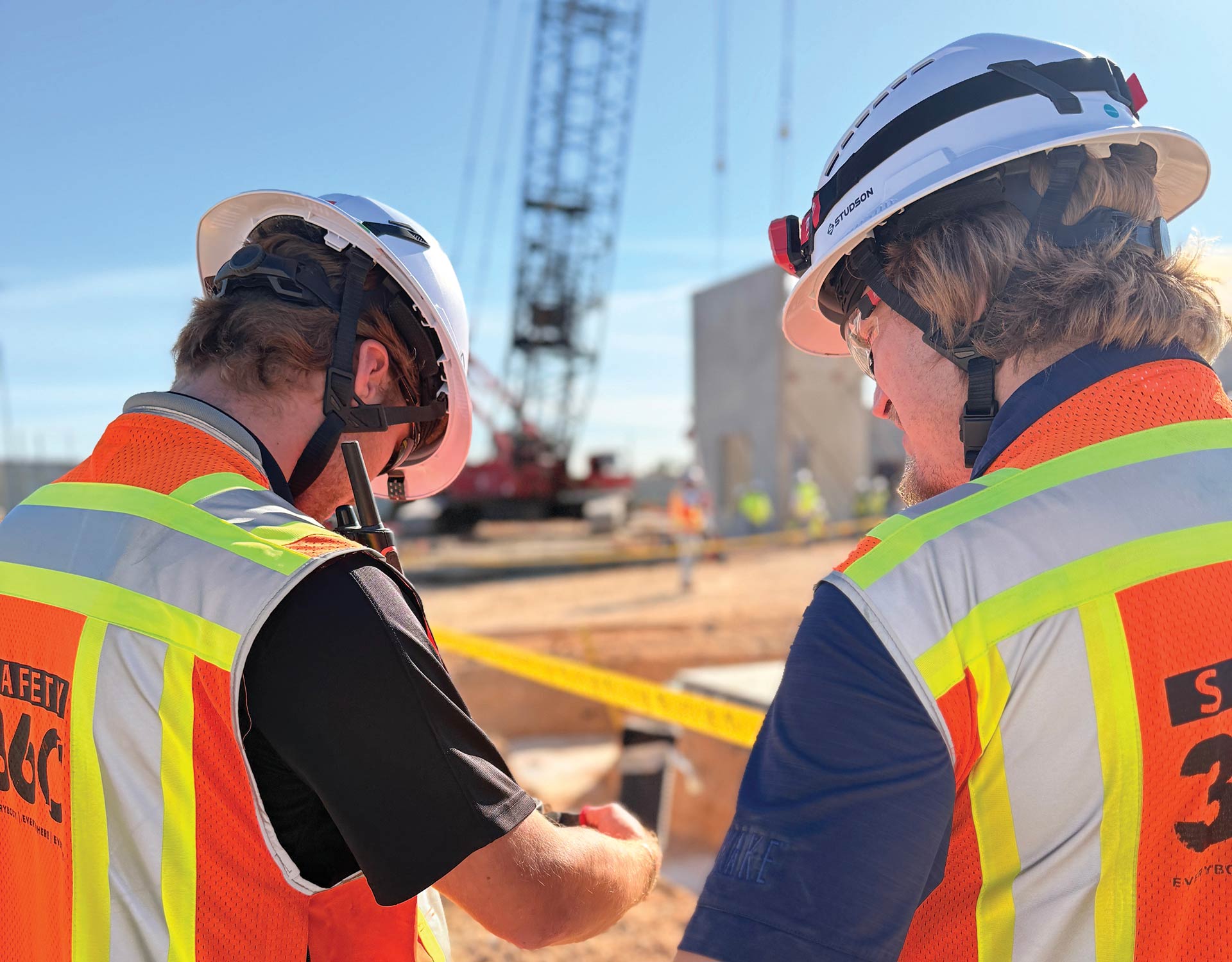
STOBG’s leading indicators initiative is identifying key project stressors, gathering meaningful data, and taking proactive steps to prevent incidents before they happen.
The construction industry relies heavily on lagging indicators—outcome metrics generated after an incident occurs and over time. This data is crucial for understanding incidents after the fact and working to prevent them from happening again.
Through a new leading indicators initiative, STO Building Group is strengthening how it recognizes potential incidents before they occur.
Leading indicators are factors that serve as early warning signs, allowing teams to make adjustments of a declining safety posture before it’s too late. By tracking these signals, project leaders can potentially reduce hazards, improve decision-making, and strengthen overall project outcomes through early intervention.
The new initiative goes beyond traditional leading indicators, looking at operations pressures like schedule compression, float erosion, and subcontractor burn rate, and an increasing number of critical path items being tracked. Schedule compression, for example, can result in overlapping tasks or extended hours, which can increase fatigue and coordination risks. By studying these and other elements, we hope to isolate important but less visible areas that affect quality and safety.
Safety and quality are a downstream outcome of operations,” SAYS KEITH HASELMAN, SENIOR VICE PRESIDENT OF CORPORATE SAFETY FOR STOBG. “Pressures from project timelines, costs, and other drivers can be enormous distractions. By better understanding these factors, we will enhance our ability to intervene early and support project teams before incidents arise.”
Through a partnership between Safety, IT, TechOps, and Data & Analytics, our team is currently screening potential metrics and developing a strategy for monitoring and interpreting data, using tools like Power BI. Their goal is to leverage diverse perspectives and develop smart analytic approaches to gain deeper insight into the factors that negatively impact project outcomes.
Using this knowledge, we hope to drive improvements that safeguard our people and elevate every project—ensuring that safety and quality remain at the core of everything we do.