
By Pete Kobelt, Director of Mass Timber, STO Building Group
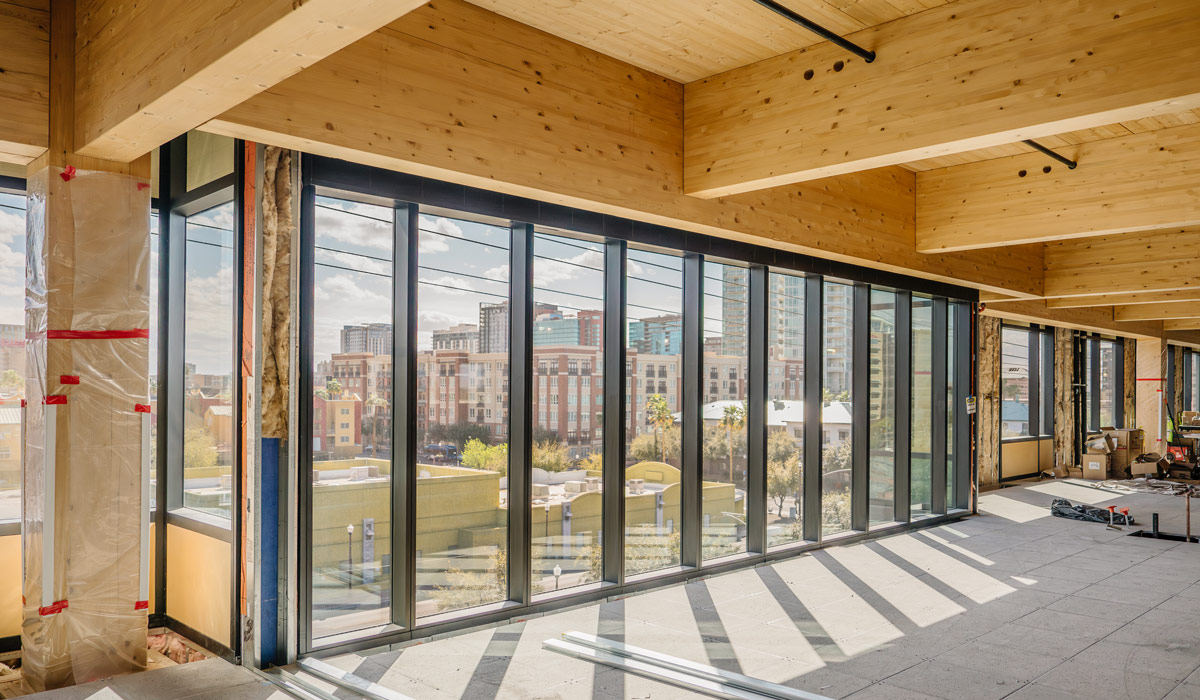
In today’s construction landscape, uncertainty is the new normal. Whether it’s the rising cost of materials, schedule disruptions, or growing pressure to meet carbon reduction goals, owners and builders alike are navigating a complex, shifting environment.
Yet amid this volatility, one solution is gaining ground as a practical, performance-driven approach: mass timber.
Mass timber is no longer a niche material reserved for design-forward buildings or sustainability showcases. It has matured into a strategic approach to building that can help solve three of the most pressing challenges facing our industry: 1) market volatility, 2) carbon accountability, and 3) the need for speed.
Material Volatility: A New Era of Risk Demands New Design, Delivery & Assembly Models
The last few years have taught us that traditional procurement models are fragile. Pricing swings in steel, concrete, and other commodities have made budgeting unpredictable. In this environment, prefabricated, precision-milled timber assemblies offer a compelling alternative.
This is about system-level thinking rather than material substitution. When teams engage timber early, they unlock a vertically integrated design-to-installation workflow that can mitigate cost risk and reduce change orders downstream.
Embodied Carbon Is No Longer Optional
As more developers, institutions, and public agencies adopt climate-aligned building targets, embodied carbon is moving to the front of the specification sheet. Traditional materials like concrete and steel account for a major portion of a building’s carbon footprint, and combined account for approximately 20% of total global carbon emissions. This is all often before the first tenant walks through the door when the operational carbon clock starts ticking.
Mass timber, by contrast, offers a unique carbon story. Not only does it require significantly less energy to produce, but it also sequesters carbon, storing it within the structure for the life of the building. Highly contingent on the design and use of any building, the embodied carbon reduction can range from around 15% to as high as 50% compared to conventional high embodied energy materials.
For project teams pursuing LEED, WELL, or ESG-driven benchmarks, mass timber provides a credible, quantifiable pathway to meeting those goals without compromising design flexibility or durability.
Precision and Speed Where It Matters Most
Urban and campus-based projects often come with logistical headaches: tight staging areas, limited laydown space, and active surroundings. This is where mass timber’s prefabrication advantage shines.
Because major structural elements arrive on-site ready to install, with millimeter-level precision, timber projects can see accelerated erection schedules—sometimes cutting weeks or even months off the timeline. That speed matters everywhere, but it delivers especially high ROI in scenarios where time is tied to revenue or operational continuity is critical.
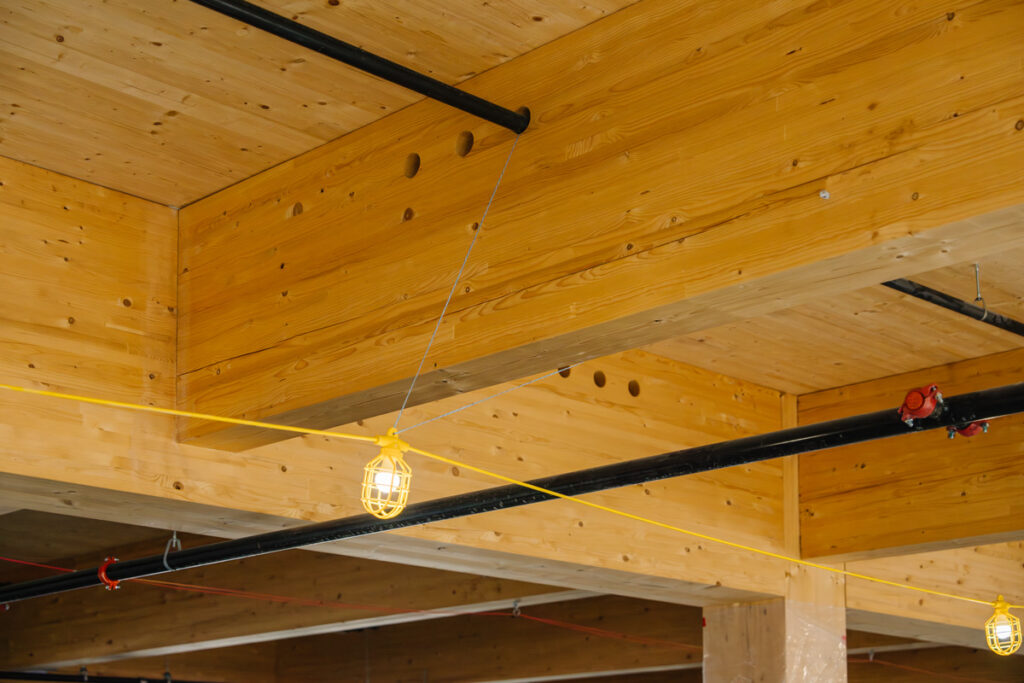
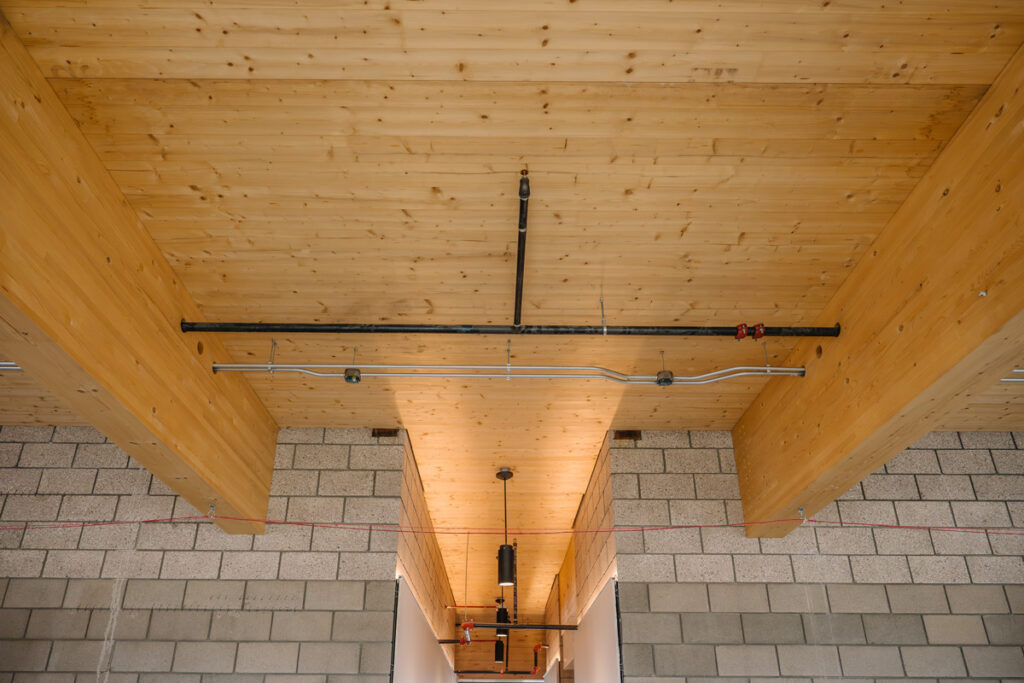
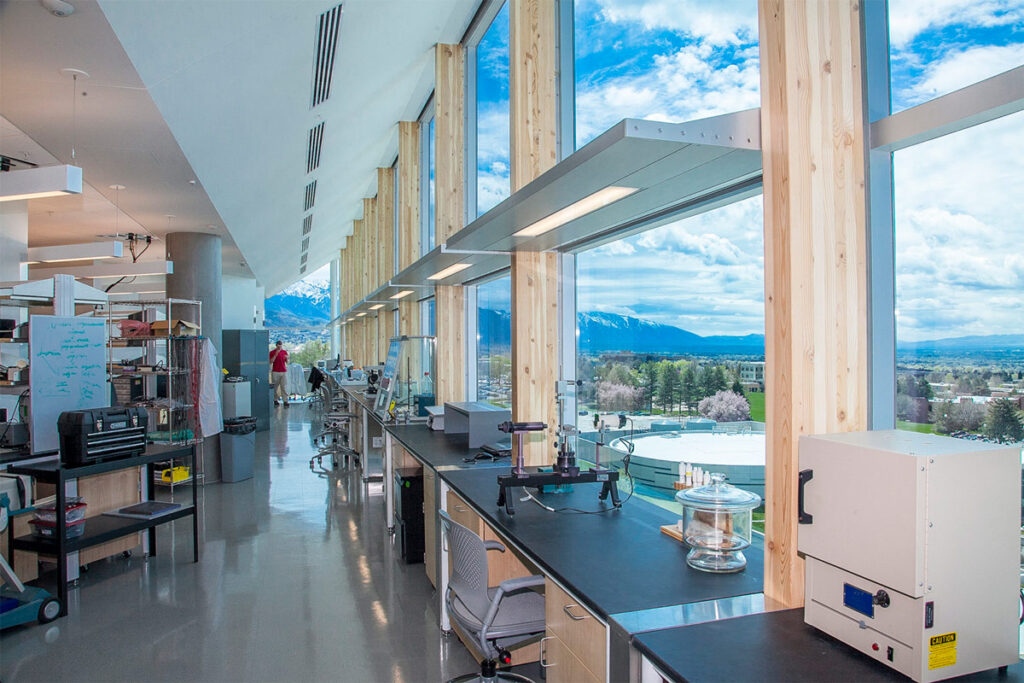
On higher education campuses, for example, stakeholders value lower noise levels, smaller crews, and faster site turnover, all of which helps minimize interference with the school’s day-to-day operations. Mass timber accelerates delivery while enhancing safety, reducing waste, and lowering overall project risk. Lighter than concrete or steel, timber also allows for simpler foundation systems, meaning further savings in time and cost.
The Shift from Material to Mindset
Embracing mass timber forces teams to collaborate earlier, plan smarter, and optimize for performance. It shifts construction from reactive to proactive. It’s no longer just about “What should we build with?” but rather, “How do we build better in a world that demands more from every project?”
As owners seek certainty, sustainability, speed, beauty, and higher health & wellness standards for their occupants, mass timber has something for everyone.

About Pete Kobelt
Pete has been engrained in the exploration of mass timber in the US since 2010, contributing to the conception and establishment of the first CLT manufacturing plants in the US and the first and largest mass timber student housing project in the US. His passion stems from his time spent studying the dramatic advances in engineered wood manufacturing and construction in Switzerland, Austria, and Germany.