

STO Building Group
The construction industry is at a pivotal moment. Everywhere I look, organizations are exploring new technologies, experimenting with artificial intelligence, and searching for ways to work smarter. The level of activity and excitement is unlike anything I have seen in years. At the same time, that excitement can create a sense of urgency that makes it difficult to focus on what truly matters.
When I took on the role of shaping the technology and innovation strategy for STO Building Group, my vision was not simply to adopt the latest tools. We are creating a culture of enablement, one that empowers our people to innovate, solve problems, and improve the way we work every day.
When many people think about AI, they think only about large language models and chatbots. But the opportunities are much broader. AI, combined with data, robotics, automation, and connected technologies, has the potential to transform how we plan, build, and operate projects. More importantly, it can help us eliminate friction in our workflows and give our teams more time to focus on high-value work.
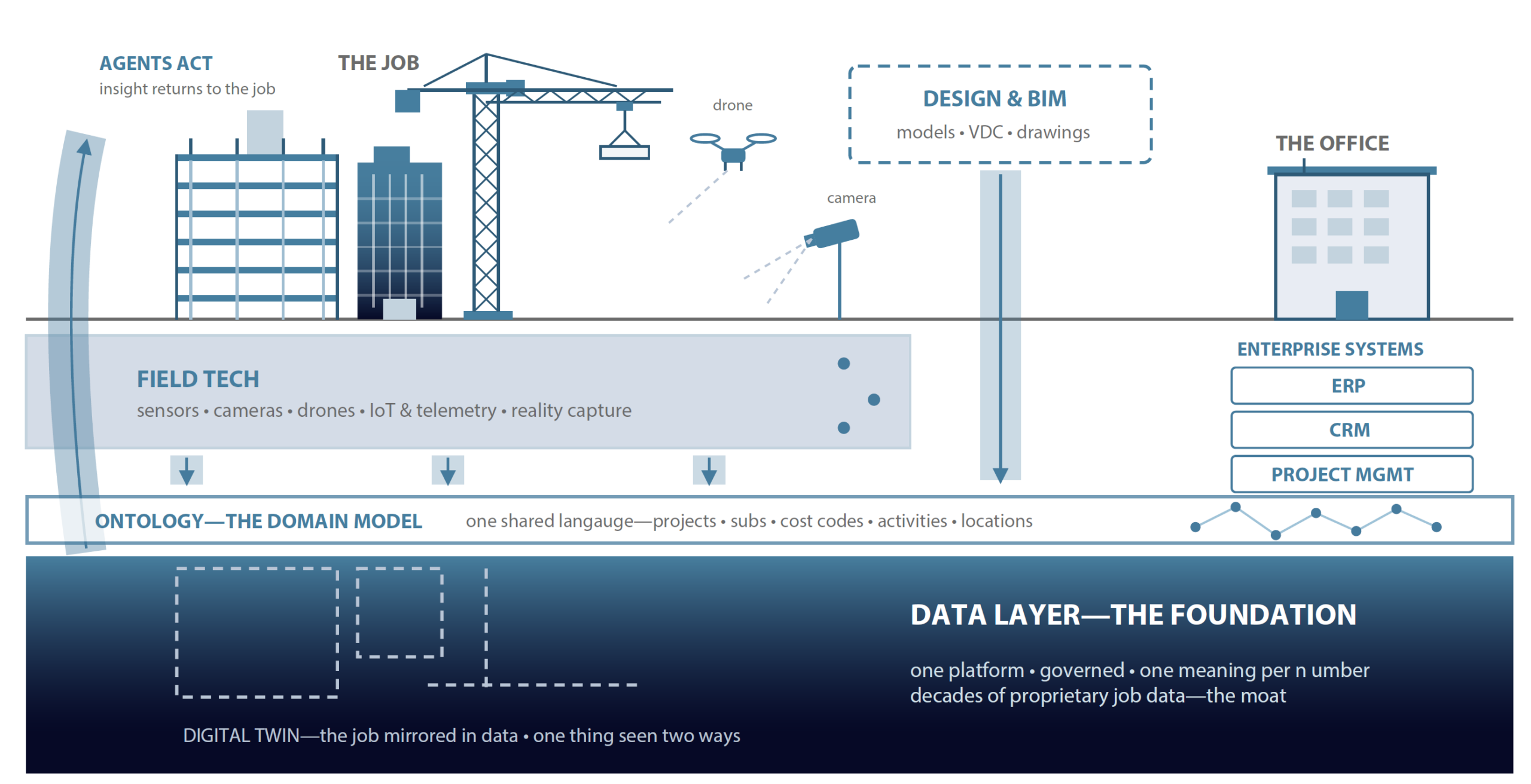
Imagine a Superintendent spending less time manually creating reports because much of the content is automatically generated and ready for review. Imagine project teams that can synthesize data from multiple sources to identify trends, anticipate risks, and make better decisions. These are not theoretical concepts. They are practical applications that can improve both productivity and quality of life for our people.
But innovation cannot be driven solely from the top down. We must democratize access to technology, data, and AI tools. We should equip teams with the resources they need to experiment, learn, and solve problems close to where the work is happening. At the same time, we need the right guardrails, standards, and governance to ensure we protect data, maintain security, and create solutions that can scale when necessary.
That balance is important. Not every problem needs an enterprise-wide solution. Many valuable innovations begin with one individual or one team finding a better way to work. Our role in technology leadership is to enable those efforts, help them succeed, and create a clear path for the most impactful ideas to grow into broader solutions for the organization. We need to share success stories, showcase real-world applications, and create a framework that builds confidence rather than anxiety.
Innovation should never exist for its own sake. Every investment, every tool, and every initiative should move us closer to a clearer goal, helping our teams work more effectively, make better decisions, and deliver greater value to our clients.
If we do that well, innovation will not be defined by the technology we deploy. It will be defined by the outcomes we create and the people we enable along the way.