
By Brooks McDaniel, Senior Vice President, STO Building Group
When it comes to repositioning a building, sometimes the most valuable real estate is sitting right above the roofline. As urban markets grow denser and the demand for high-quality space intensifies, vertical expansions and overbuilds are becoming an increasingly powerful tool in the repositioning toolbox. These projects allow owners to maximize the potential of existing assets by adding new, high-performing square footage on top of an aging or underutilized base.
While the concept of building up isn’t new, what’s changing is the level of technical sophistication, strategic coordination, and value creation these projects now represent. At STO Building Group, we’ve been at the forefront of this shift, delivering vertical expansions across a range of asset types and scales. And while no two are alike, the decision to go vertical always starts with one question: is this building a good candidate?
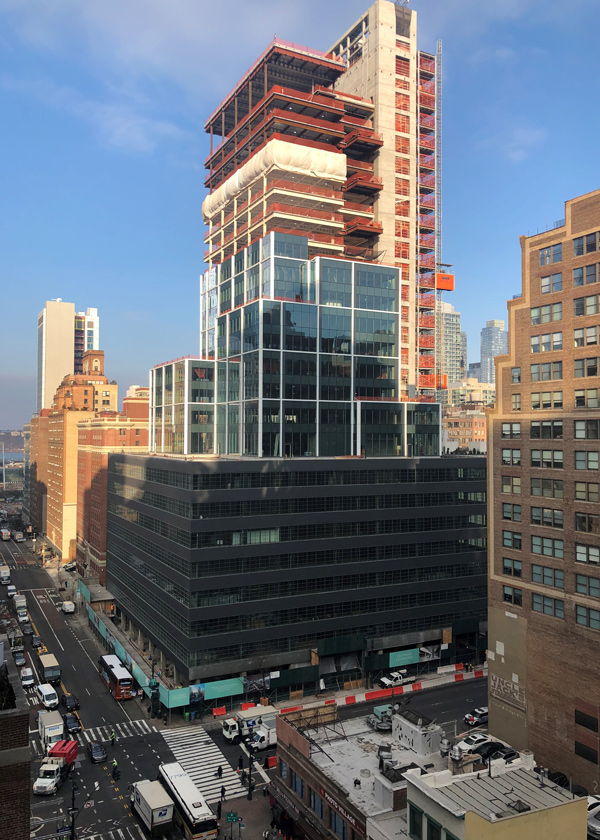
New York, NY
Why Go Vertical?
The benefits of a vertical expansion are clear, particularly in high-barrier-to-entry markets like New York City, where land is scarce and acquisition costs are steep. By leveraging existing structures, owners can unlock new value without relocating tenants or starting from scratch.
Some other key drivers include:
- Urban density. Vertical expansion is often the only way to increase usable area in tight urban footprints.
- Unused development rights. Buildings that fall below their allowable floor area ratio (FAR) present ripe opportunities for overbuilds.
- Upgrading asset class. Adding new floors, facades, and MEP systems can reposition a Class B or C asset into a Class A destination.
- Zoning incentives. In some cases, local regulations offer height bonuses or incentives for adding residential or public space components.
- Maximizing premium space. The uppermost floors of a building typically command the highest rents and sale prices, meaning that new vertical additions often represent the most valuable square footage an asset can offer.
But just because you can build up doesn’t mean you should. The key lies in understanding the technical and regulatory factors that determine feasibility.
What Makes a Building a Good Candidate?
A successful vertical expansion starts with understanding of the base structure. Here are the core factors we evaluate when considering an overbuild:
- Structural Capacity: Older buildings were often overengineered, offering surplus load capacity that can be tapped for vertical additions. But that’s not always the case. We assess column sizes, spacing, and layout, along with the load path to the foundation. In some cases, a new steel transfer structure may be required to redistribute loads.
- Foundation Strength & Soil Conditions: Even if the structure above is sound, the foundation must be able to carry the increased weight. Geotechnical studies can reveal whether underpinning, micropiles, or ground improvements are necessary.
- Core & Circulation Adaptability: New floors mean more people, and that means more elevators, stairs, and egress capacity. Often, vertical expansions require core extensions or reconfiguration to meet code.
- MEP System Integration: Adding floors demands careful coordination of HVAC, electrical, plumbing, and life safety systems. Decisions must be made early about whether to tie into existing systems or provide new, standalone infrastructure for the overbuild.
- Zoning & Regulatory Context: Understanding the zoning envelope, historic designations, air rights, and neighboring site restrictions is critical. Vertical additions may also trigger additional reviews from city planning, DOB, or landmarks commissions.
New York, NY
Construction Complexity: Planning for the Unplannable
Vertical expansions are among the most technically challenging repositioning projects we take on. From logistics and sequencing to tenant coordination, success requires precise planning and expertise. Some of the challenges we plan for include:
- Structural staging. Erecting new steel or concrete above an existing structure often requires temporary support systems and load transfer mechanisms.
- Tenant consideration. Working in occupied buildings demands careful noise, dust, and vibration control—as well as clear communication with tenants.
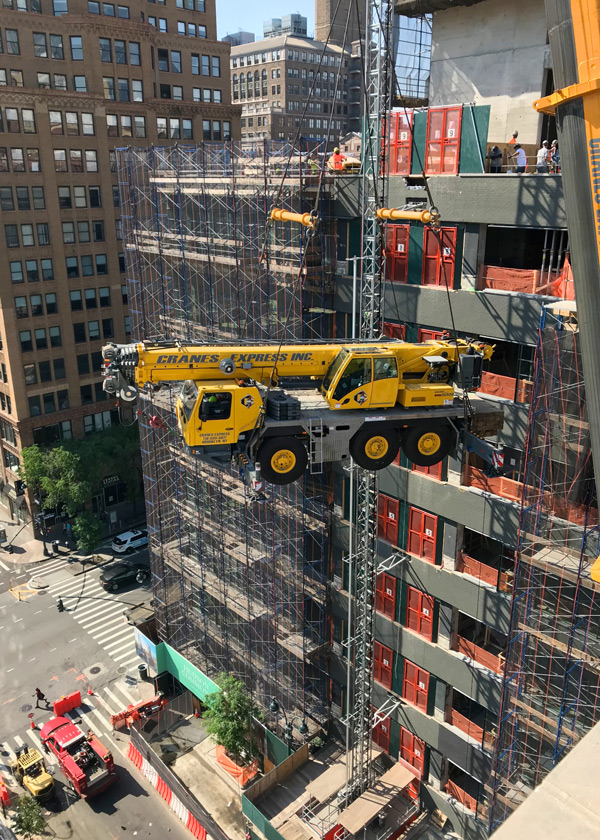
- Material logistics. Craning large elements into tight urban sites requires detailed scheduling, staging, and coordination with city agencies.
Vertical Expansions in Action
In New York City, Pavarini McGovern has delivered several high-profile overbuilds in the last several years. The most notable being:
SoMA (25 Water Street)
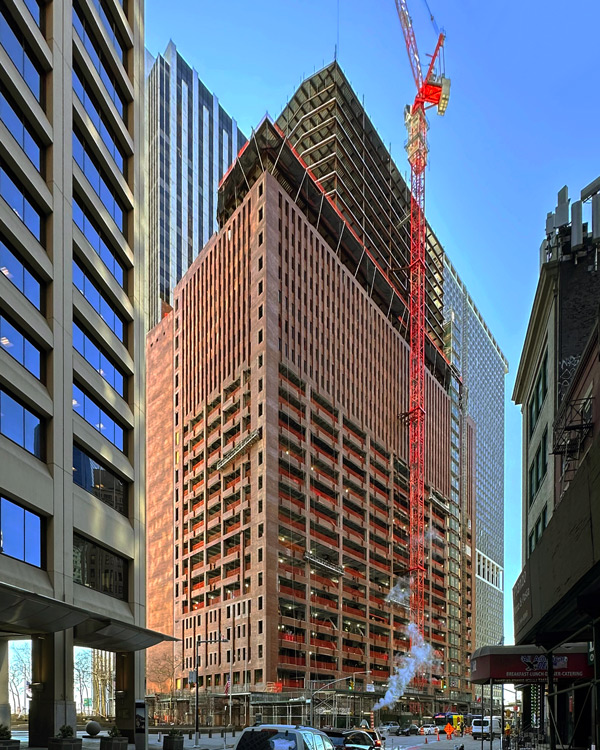
Formerly a 1970s office building in Manhattan’s Financial District, 25 Water Street has been transformed into a next-generation mixed-use property through one of the city’s most ambitious vertical expansions. The project added 10 new stories on top the existing structure, introducing modern residential units and amenity spaces while retaining and reconfiguring portions of the commercial base. Pavarini McGovern managed complex vertical logistics and phased MEP integration, all within the constraints of a dense, active downtown site.
Hudson Commons (441 9th Ave)
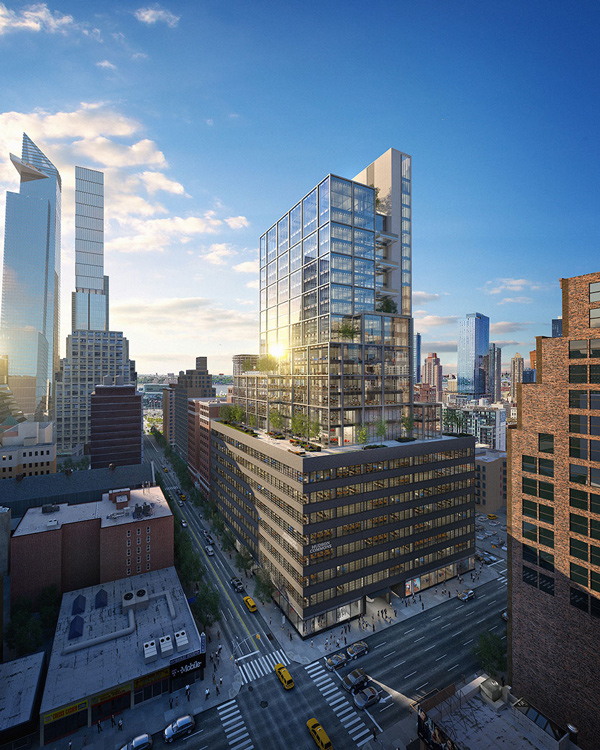
At Hudson Commons, Pavarini McGovern delivered an ambitious eight-story steel overbuild atop an existing eight-story warehouse. The result is a striking blend of historic and contemporary architecture, supported by upgraded cores, new mechanical systems, and a custom unitized curtainwall that connects old and new.
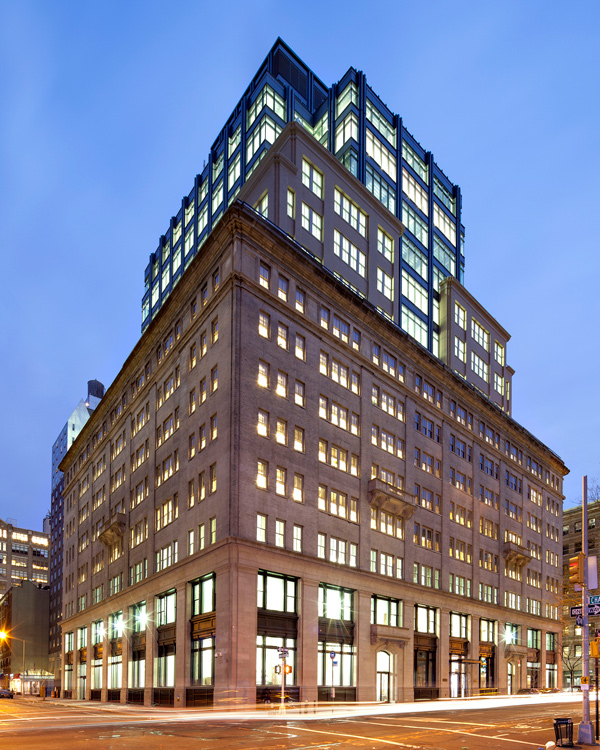
At 330 Hudson Street, Pavarini McGovern constructed an eight-story vertical expansion on top of a pre-war office building in Manhattan’s Hudson Square neighborhood. The repositioning project included significant upgrades to building systems and interiors, a modern glass curtainwall for the new floors, and a restored historic facade below. The result was a revitalized, LEED Gold-certified commercial asset that blends 1920s character with 21st-century performance.
When to Go Vertical
Not every building is cut out for an overbuild. In some cases, the cost of foundation upgrades or code compliance outweighs the value gained. But in the right context—with the right team—vertical expansion can turn a tired mid-rise into a trophy asset.
Owners should consider:
- Long-Term Hold Strategy: Vertical expansions make the most sense when the goal is long-term value creation, not short-term turnover.
- Permitting Risk: Early engagement with zoning experts and DOB expediters can clarify what’s possible before significant design dollars are spent.
- Capital Stack & ROI Timeline: These projects require upfront investment but can deliver outsized returns through increased leasable area and improved asset class.
The Future Is Up
In today’s evolving real estate market, the ability to strategically build on what already exists is more valuable than ever. Vertical expansions and overbuilds are about reimagining what’s possible.

About Brooks McDaniel
Brooks leads STO Building Group’s Building Repositioning practice, guiding strategy and execution across the organization with a focus on complex transformations in the New York City market. His experience spans design, development, and construction, shaped by prior roles at Extell Development Company and SHoP Architects. A registered architect, Brooks brings a multidisciplinary perspective to repositioning projects, leveraging his background in both architecture and real estate to help clients unlock long-term value from underutilized assets.