
On Captiva Island, Florida, a creative legacy is being carefully restored. For decades, the campus—originally shaped by artist Robert Rauschenberg—has served as a retreat for artists seeking space to live, work, and collaborate. Through the Captiva Adaptation Project, Ajax Building Company balanced historic preservation with the realities of modern construction in a challenging coastal environment.
COMPOUNDING CHALLENGES IN A COASTAL ENVIRONMENT
What makes the 45,000sf Captiva campus distinctive is also what makes it complex. Rather than a unified development, it evolved over decades as properties were acquired and adapted into creative spaces.
“Painter Robert ‘Bob’ Rauschenberg bought the Beach House in 1968,” says Jody Brown, general superintendent at Ajax. “After that, he continued purchasing neighboring properties, expanding the campus from the Gulf side all the way to the bay.”
Today, the campus comprises a diverse collection of structures—many dating back to the 1920s—each with its own construction type, condition, and level of prior renovation. “No two buildings were the same,” Brown says. “Each one had to be evaluated and addressed individually.”
That complexity was compounded by major disruptions. A hurricane impacted the site before construction began, followed by two additional storms that pushed surge levels above finished-floor elevations, causing widespread damage to buildings and infrastructure.
The impact extended beyond the jobsite. With Sanibel and Captiva Islands heavily damaged—including the limited road access to the site—mobilizing labor and materials became a logistical challenge.
Access to the site was significantly constrained following the storms,” SAYS AJAX SENIOR PROJECT MANAGER DAN DREIER. “With damage to island infrastructure and limited roadway access, mobilizing manpower and coordinating deliveries required detailed planning and constant adjustment.”
On-site, a wall of water and sand—reaching up to seven feet—swept across the island, destroying stored equipment and materials, including those in Conex boxes.
At the same time, a more than two-year COVID shutdown left structures without power or maintenance, accelerating interior and system deterioration. “Most were just starting to be put back together,” Brown adds.
In response, Ajax implemented a building-by-building assessment strategy to evaluate structural integrity, flood damage, MEP systems, and code compliance—often requiring removal and replacement of nonconforming or storm-damaged work.
NAVIGATING UNKNOWNS WITH TRANSPARENCY
Taking over the project also meant inheriting incomplete work, materials, and contracts from a previous contractor—adding another layer of complexity.
“A big part of it was inventorying what had already been purchased an understanding what we actually had left,” Brown says.
With conditions varying across the site and unknowns at nearly every turn, the team operated under a transparent, open-book approach.
“The owner brought us in to determine what was needed to deliver a usable, completed campus,” says Ajax’s Florida regional director, Tim Sewell. “That required real-time evaluation, collaboration, and trust.”
Originally expected to take less than a year, the project ultimately extended to 18 months as conditions were uncovered and addressed in the field.
BUILDING FOR COLLABORATION
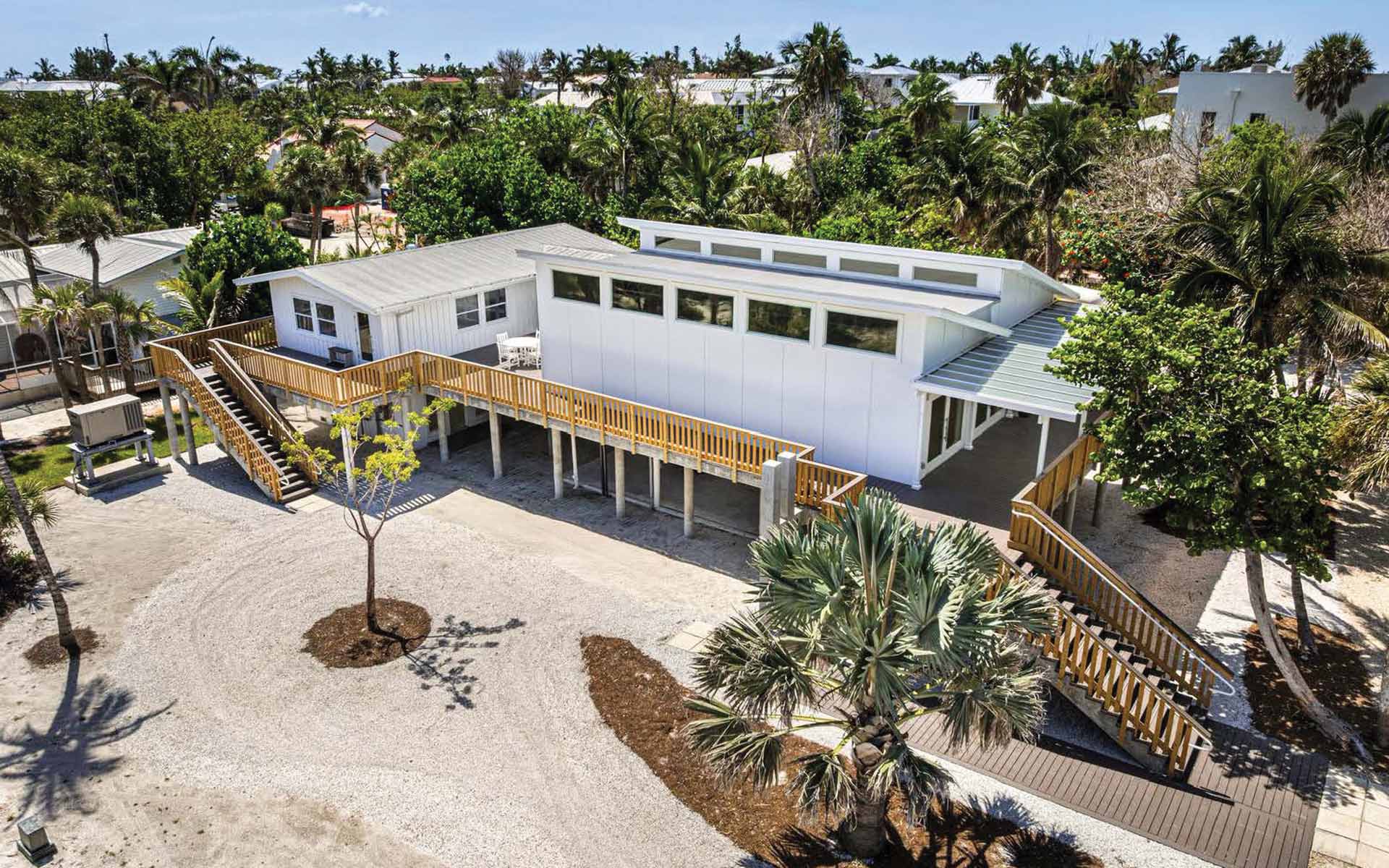
At the heart of the revitalized campus is the new Courtyard Building—a purpose-built space designed to support a range of program functions.
The building includes writing and media studios, a music recording studio, and shared amenities, including a commercial-grade kitchen and dining area. “The general purpose is a studio and a gathering place,” adds Cameron Temple, project manager at Ajax.
Delivering the project required a high level of coordination, particularly as portions of the campus began to reopen during construction. The team worked around occupied buildings and returning residents, continuously adjusting sequencing and logistics.
The Courtyard Building also presented a series of challenges that ultimately drove the critical path for the project schedule. The existing window and storefront systems required full replacement due to original installation issues. In addition to reordering the heavy storefront assemblies, the surrounding substrate—comprised of steel tubes and wood structural framing—required extensive rework to achieve the required alignment and geometry of the building design.
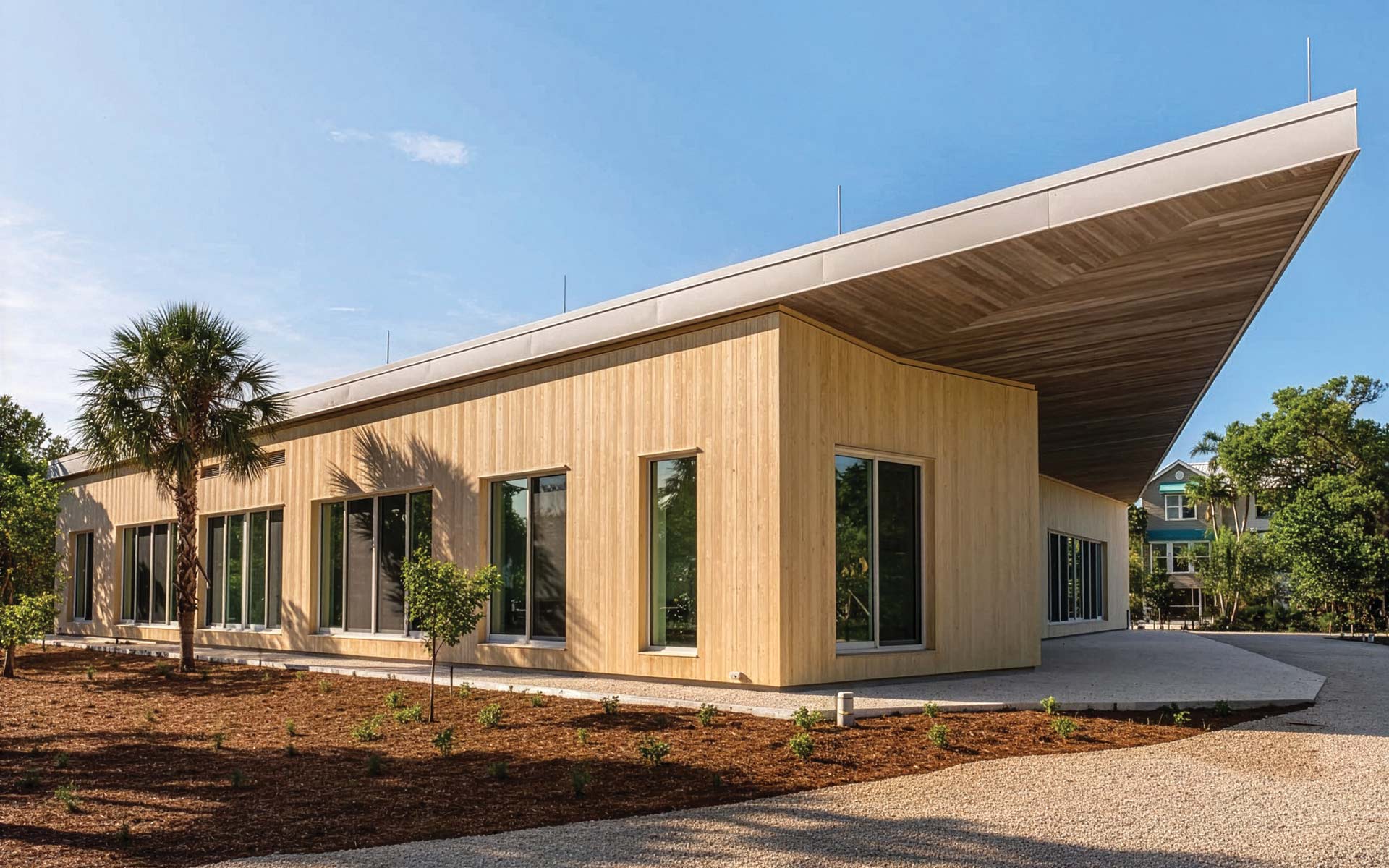
Ajax also worked closely with the owner and design team to reimagine the exterior façade. Originally designed as a GFRC panel system, the façade was redesigned as a wood slat veneer system to better align with project conditions and material lead times. “It really came down to constant communication,” says Temple. “We had weekly meetings, but there were conversations happening almost every day.”
RESTORING PURPOSE
For Ajax, the project reflects a broader approach to construction—one grounded in partnership, adaptability, and a clear understanding of the end user.
“Being able to provide a place where artists can do their work—that’s what it’s all about,” Brown said.