
Across life sciences, healthcare, mission critical environments, and corporate campuses, one trend has become clear: projects are getting bigger, faster, and more complex than ever before. What was once considered ambitious is quickly becoming the new baseline. We’ve entered an era of “mega projects.”
WHAT MAKES A PROJECT “MEGA”?
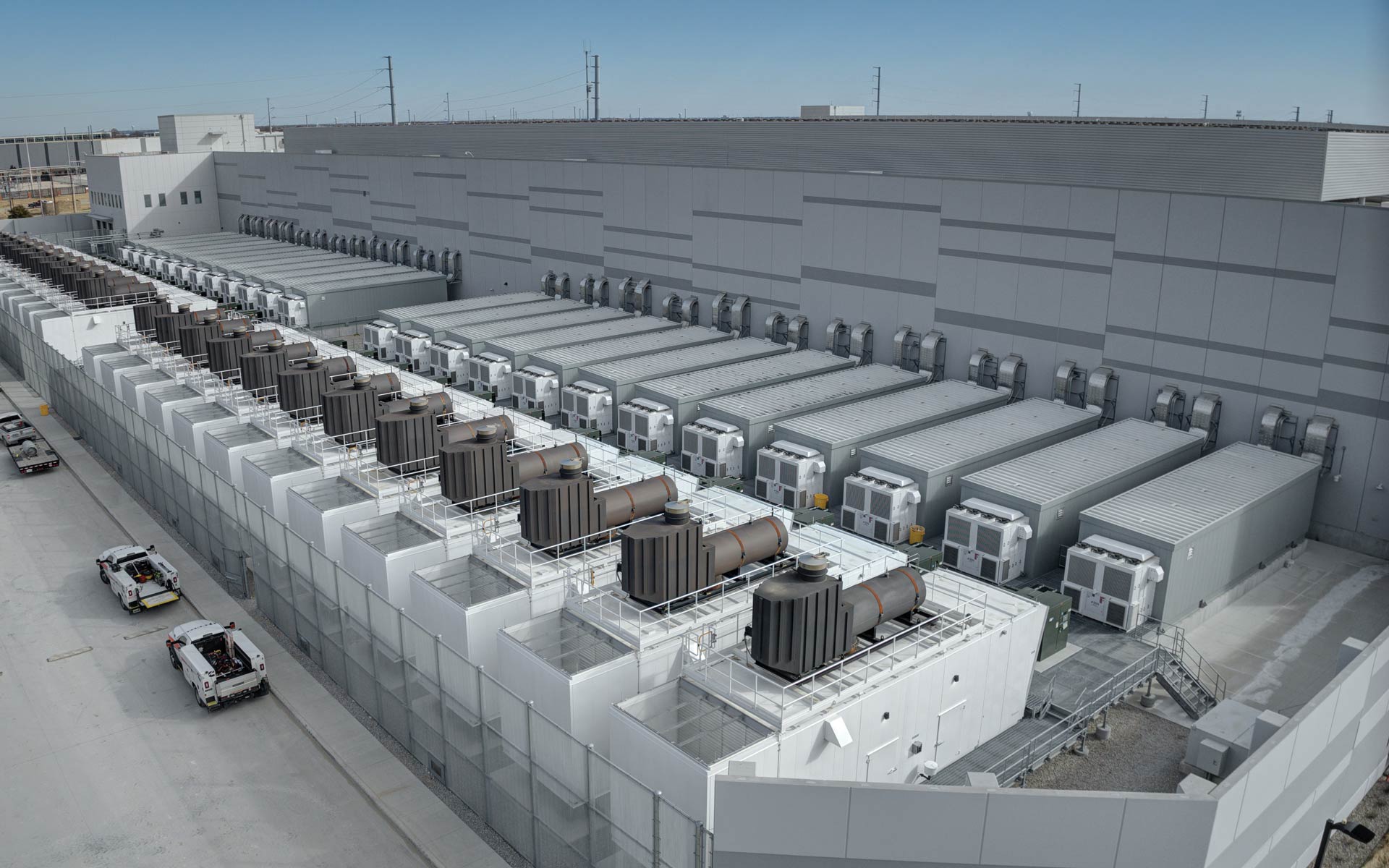
What qualifies as a mega project can vary by sector. In general, it might refer to a multibillion-dollar program. In life sciences or healthcare, it could mean a large-scale campus or a highly technical facility. In mission critical, it often points to AI-driven hyperscale developments with multiple data center buildings on a single campus. Regardless of the definition, the common thread is scale in size and complexity.
In theory, mega projects are meant to deliver efficiency, speed to market, and long-term capacity. In practice, however, they require a level of coordination that traditional delivery models were never built to handle. As Jennie Taveras, life sciences sector lead at STO Building Group, notes, “In many cases, the root cause of project setbacks is not scientific complexity, but construction realities that were undervalued early in the planning process.”
That same pattern is emerging across sectors. In mission critical environments, for example, demand for data centers continues to accelerate, but projects are increasingly constrained by power availability, permitting, workforce limitations, and local stakeholders. These are the factors determining how quickly projects can move forward today.
At this scale, quality is defined by coordination, not just execution.
THE PROCUREMENT PUZZLE
One of the earliest pressure points in mega projects is procurement. Long-lead equipment, global supply chains, and vendor dependencies have always required careful planning. However, at today’s scale, procurement has become a central driver of project success or failure.
What’s changing is visibility. As Rafal Piekarski, strategic sourcing manager at Construction Procurement Solutions (CPS), explains, access to data across projects is beginning to shift how teams approach sourcing.
Our business model allows us to be uniquely positioned to connect what we are seeing across projects, markets, and vendor relationships,” RAFAL PIEKARSKI SAYS. “That gives us a broader procurement view and helps our teams make more informed decisions earlier in the process.”
For teams with a well-developed procurement strategy, this broader view allows them to anticipate constraints earlier, better align purchasing decisions with construction sequencing, and make more informed decisions overall.
LIMITS OF THE WORKFORCE
If procurement is one side of the equation, labor is the other. Mega projects demand workforce strategies that go far beyond traditional staffing models. On large campuses, peak manpower can reach into the thousands, with demand for specialized trades outpacing supply in many markets.
As Greg Dunkle, chief operating officer at STO Building Group, noted, “The challenge isn’t simply the number of workers available. It’s access to the right skilled trades required to execute highly technical projects.”
In response, teams are planning earlier by engaging key trade partners upfront, leveraging modular and prefabricated approaches, and tapping into their national networks to deploy skilled crews where they are needed most.
Once the necessary labor is secured, coordination, safety, and productivity bring another set of challenges. Larger crews, extended schedules, and high-energy environments require more structured planning and communication. Safety programs must evolve accordingly, with greater emphasis on safety culture, fatigue management, and consistent, site-wide protocols. A builder’s approach to workforce challenges will define whether a project stays on track.
LOGISTICS AT SCALE
Logistics is another defining layer of a mega project. Material flow, site access, staging, and workforce movement must all be orchestrated with precision, often across sprawling campuses operating at full capacity. In response, teams are rethinking when logistics planning begins. On large campuses, this often includes off-site staging areas, coordinated delivery systems, and dedicated logistics teams responsible for managing material flow and workforce movement in real time.
THE ROAD TO READINESS
In highly technical environments, construction completion does not equate to operational readiness. Systems must be integrated, validated, and commissioned before a facility can perform as intended. Too often, quality, commissioning, and turnover are treated as downstream activities, addressed after the bulk of construction is complete. The result is extended timelines, late-stage issues, and delayed handovers. To streamline these processes, leading teams are integrating quality and commissioning into the schedule from the outset. By aligning these functions with design, procurement, and construction, this approach reduces rework and speeds up the path to operation.
WHAT’S NEXT
The scale of investment across life sciences, healthcare, and mission critical sectors shows no signs of slowing down, but the ability to deliver these projects successfully will depend less on size and more on how well teams can navigate the complexity that comes with it. The builders that succeed will be those that can see challenges earlier, integrate effectively, and execute with consistency across large and complex portfolios.