Located in the heart of the city, Fairmont Olympic has long been known as one of the go-to hotels in Seattle. Originally built in 1924 and known as the Olympic, the landmark spot is evolving for a new era. Its latest renovation set out to reinforce its iconic legacy, transforming its public spaces into a vibrant, modern gathering place while preserving the historic character that defines the building.
BLENDING HISTORY WITH INNOVATION
Renovating a historic property comes with complexity, particularly when the objective is to make improvements feel invisible.
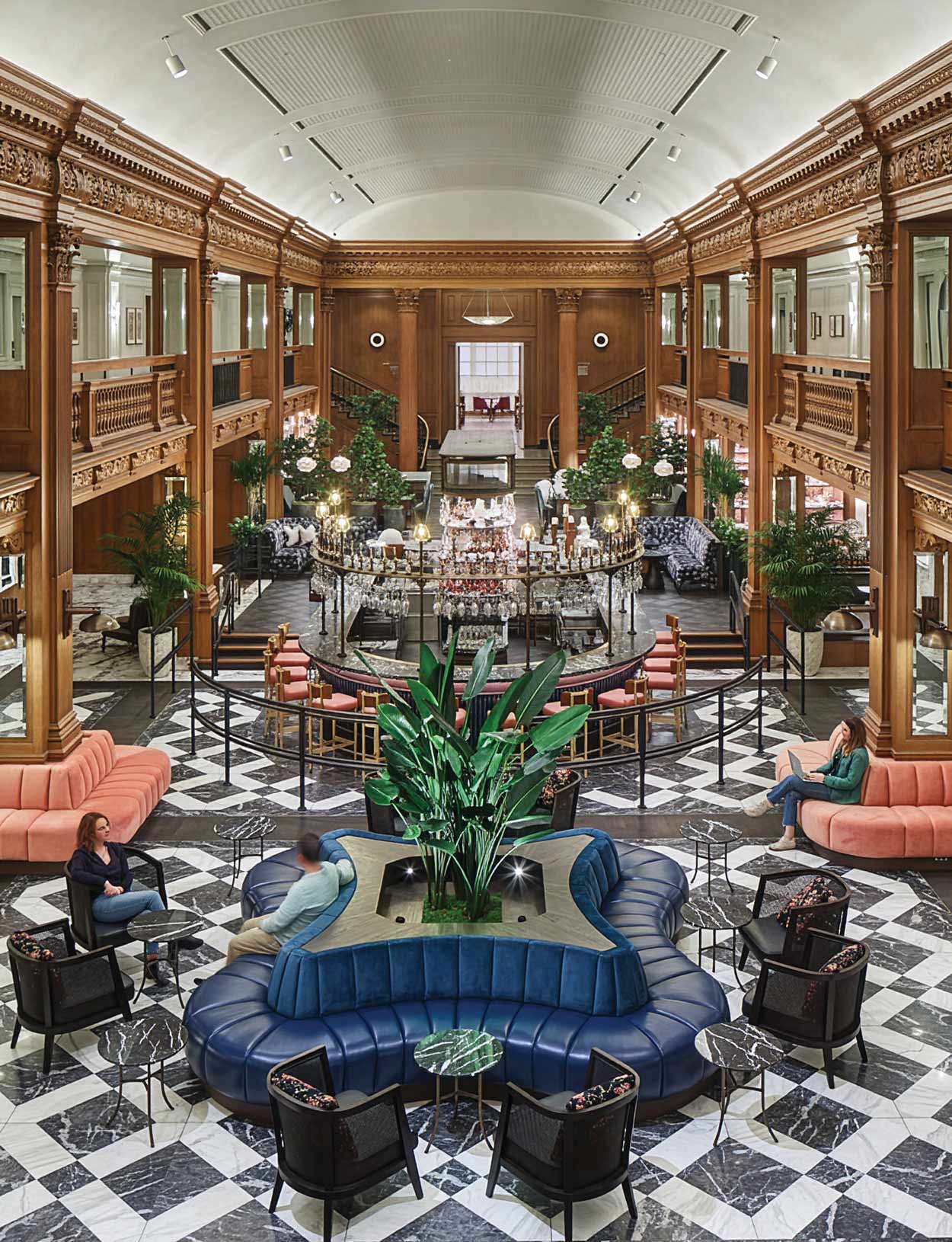
A key priority was preserving original architectural elements while raising them up to modern standards. Existing millwork, including handrails, column wraps, and ornate carvings were carefully restored instead of being replaced. In many cases, the Abbott team developed creative solutions to meet current codes without compromising historical authenticity. For example, handrails were extended to meet ADA requirements, but original wood top caps were reinstalled by the Abbott finish carpentry team to maintain their vintage appearance. The lobby now includes multiple ADA lifts and ramps, ensuring all guests can easily navigate the space.
SEATTLE’S SOCIAL HUB
Today, the revitalized Fairmont Olympic Hotel has reestablished itself not just as a hotel, but as a destination. For the project team, the success is measured not only in craftsmanship but in experience.
“There’s a sense of pride that we created such a unique gathering space that’s providing joy to so many people,” says Bry. “It’s become the place to be.”
CRAFTSMANSHIP AT EVERY DETAIL
The renovation called for an exceptional level of detail, particularly in high-end finishes and custom elements. Rather than relying on a single subcontractor, the team divided millwork among multiple local suppliers, allowing each team to focus on specific features.
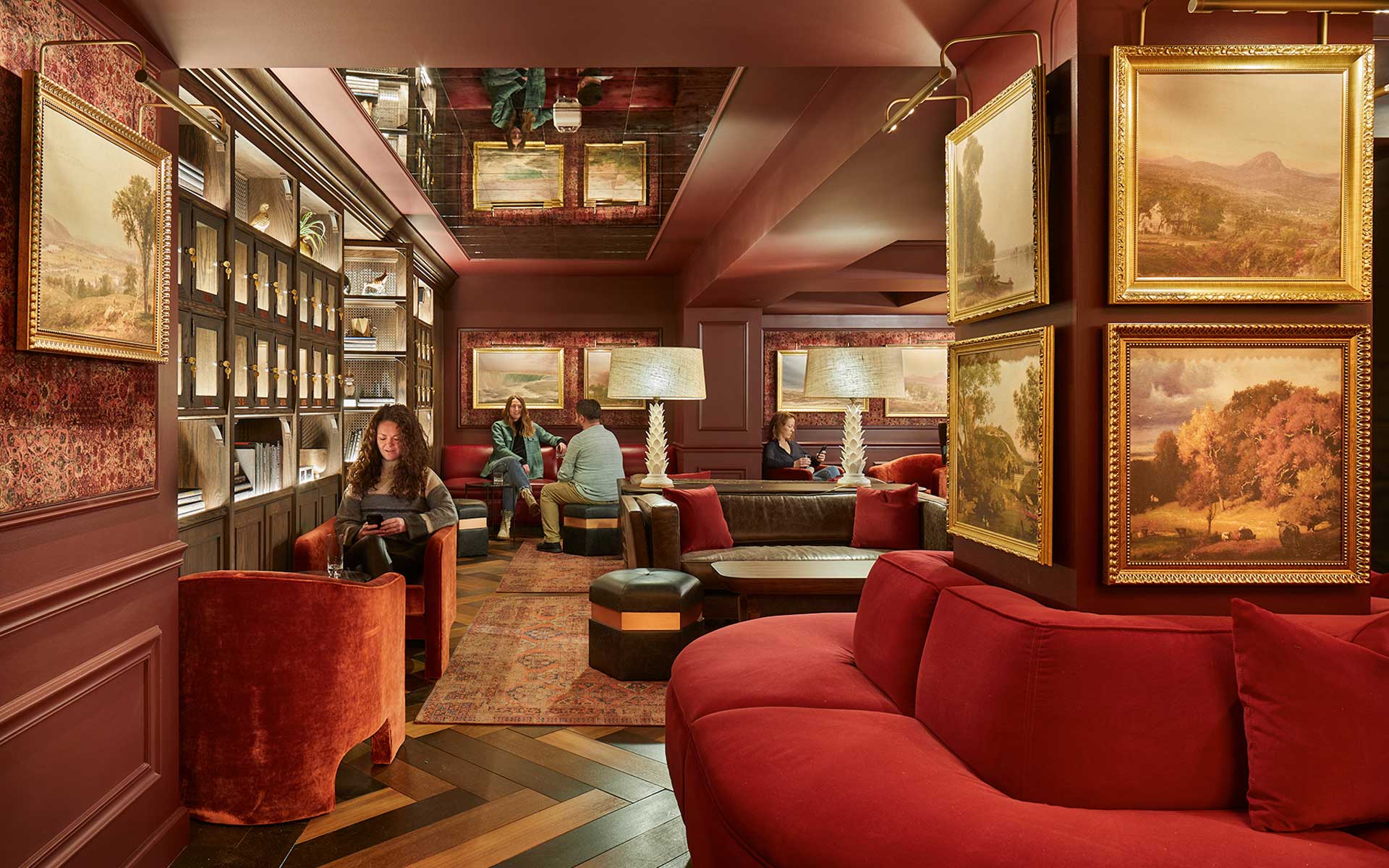
The standout additions include the hotel’s three bar spaces: a central lobby bar that anchors the revitalized public space, a refined bar within The George restaurant, and the Founder’s Club, a hidden speakeasy-style lounge accessed through a concealed door.
That hidden entrance became a defining moment of creativity. Originally designed with a floor-mounted caster for support, the Abbott self-perform finish carpentry team suggested a change to the door design late in the project, removing the caster and reinforcing the structure with a concealed steel frame. The result is a door that enhances the sense of discovery without leaving a trace of modern intervention.
This same attention to detail was carried throughout the project. Marble from Italy— shipped just before pandemic shutdowns and delivered to Seattle weeks later—was incorporated into new flooring while existing marble elements were repurposed on the revitalized reception desks. In the “garden room,” where the hotel often hosts weddings, the irrigation system had damaged many of the oak panels surrounding the room. The finish carpentry team was able to custom match each of the panels to the ones next to them. “When I show people around the hotel, it’s a fun game to ask people to find the five panels in the room that were replaced. Most people can’t locate them,” says Bry.
SUDDEN SHIFTS
Construction began in January 2020, just as the COVID-19 pandemic was about to reshape the world. Within months, the project faced shutdowns and unprecedented challenges. With stakeholders spread across multiple time zones—owners in Denver, designers in Boston, and design leadership in Spain—the team adopted new collaboration methods. Frequent video calls and weekly decision meetings became essential tools for maintaining progress.
“We reviewed a decision matrix every week, line by line, and we’d talk through every item and work as a group to generate ideas. We regularly proposed how we thought elements could be built, along with recommendations from our subcontractors. The team would review those ideas and typically approve them,” says Bry.
The pandemic created unexpected opportunities; ownership expanded the project scope to include additional upgrades on the pool deck and in many other areas of the facility. With the building mostly vacant, construction crews were able to work more efficiently and with fewer logistical constraints.